Movement Breaks at Work: How Walking and Standing Offset Sitting

You can do everything "right" — hit the gym in the morning, eat well, sleep enough — and still spend eight or nine hours a day in a chair. It turns out those long, unbroken stretches of sitting carry their own risk, separate from how much you exercise. The good news is that the fix is small and doable: short movement breaks at work, taken regularly, can offset a surprising amount of the damage a desk job does.
This guide covers what the research actually shows about breaking up sitting, the sweet spot for how often to move, how walking and standing breaks differ in what they do, and the simple habits that make them stick. It's one piece of a bigger picture — see our complete guide to movement and mobility for people who sit all day.
Key Takeaways
- Prolonged sitting carries health risks on its own — even for people who exercise regularly — so a daily workout doesn't fully cancel out a sedentary workday.
- In one lab study, five minutes of walking every 30 minutes was the standout: it was the only routine that lowered both blood sugar and blood pressure.
- Frequency beats duration. Short breaks spread across the day do more than one long one — and any movement is better than none.
- Standing isn't the same as moving. A standing desk helps you sit less, but the bigger wins come from actually walking and shifting position.
- The small stuff counts: pacing on calls, walking to a colleague, taking the stairs — these "movement snacks" add up over a day.
Why Breaking Up Sitting Matters
It's tempting to assume a morning workout buys you the rest of the day on the couch or in the chair. The evidence says otherwise. The World Health Organization notes that higher amounts of sedentary behavior in adults are associated with increased all-cause mortality, cardiovascular disease, and type-2 diabetes — and its guidelines now explicitly recommend that all adults limit the time they spend being sedentary, not just hit an activity target.
The Mayo Clinic makes a similar point: too much sitting has been linked to obesity and metabolic syndrome and seems to raise the risk of heart disease — though staying physically active offsets much of that risk. In other words, exercise still matters enormously. But how you spend the other fifteen waking hours matters too, and a desk job tends to fill a lot of them with stillness.
That's the case for movement breaks. You're not trying to replace your workout — you're interrupting the long, unbroken hours of sitting that quietly stack up between workouts.
How Often Should You Take a Movement Break?
If there's a single number worth remembering, it's this: move for a few minutes every 30 to 60 minutes of sitting.
The most useful data here comes from a small 2023 study led by exercise physiologists at Columbia University Irving Medical Center. Researchers had participants sit for eight hours and tested several "exercise snacks" — different combinations of walking length and frequency. The standout was five minutes of walking every 30 minutes: it was the only routine that significantly lowered both blood sugar and blood pressure, and it cut post-meal blood sugar spikes by 58% compared with sitting all day. Shorter or less frequent breaks helped less; walking just once an hour offered little benefit.
It's worth being honest about the limits here. This was a small study — 11 adults, mostly in their 40s to 60s, tested in a lab — so the exact "five minutes every 30" figure is a useful target, not a magic threshold. The broader takeaway is the reliable one: break up sitting often, and frequency matters more than how long any single break lasts. Even standing up and walking to refill your water counts.
Walking Breaks: The Most Effective Reset
Of all the ways to break up sitting, a short walk does the most. In that Columbia study, every walking routine lowered blood pressure by 4 to 5 mmHg compared with sitting all day — which the lead researcher described as comparable to what you'd expect from six months of daily exercise. Most walking routines also improved participants' mood and reduced fatigue, which matters for a simple reason: people repeat things that make them feel good.
The trick is fitting walks into a workday without derailing it. A few that work:
- Take calls on your feet. Phone meetings and check-ins rarely need you at the keyboard — walk a loop while you talk.
- Walk to ask, don't message. When you can, walk over to a colleague (or just down the hall) instead of sending a message.
- Use natural breakpoints. Refill your water, make coffee, or step outside between tasks rather than powering straight through.
- Try a walking meeting. For one-on-ones that don't need a screen, walking and talking works surprisingly well.
None of this requires gym clothes or a shower afterward. The point is to get up and move for a couple of minutes, often.
Standing Breaks and Standing Desks: What They Actually Do
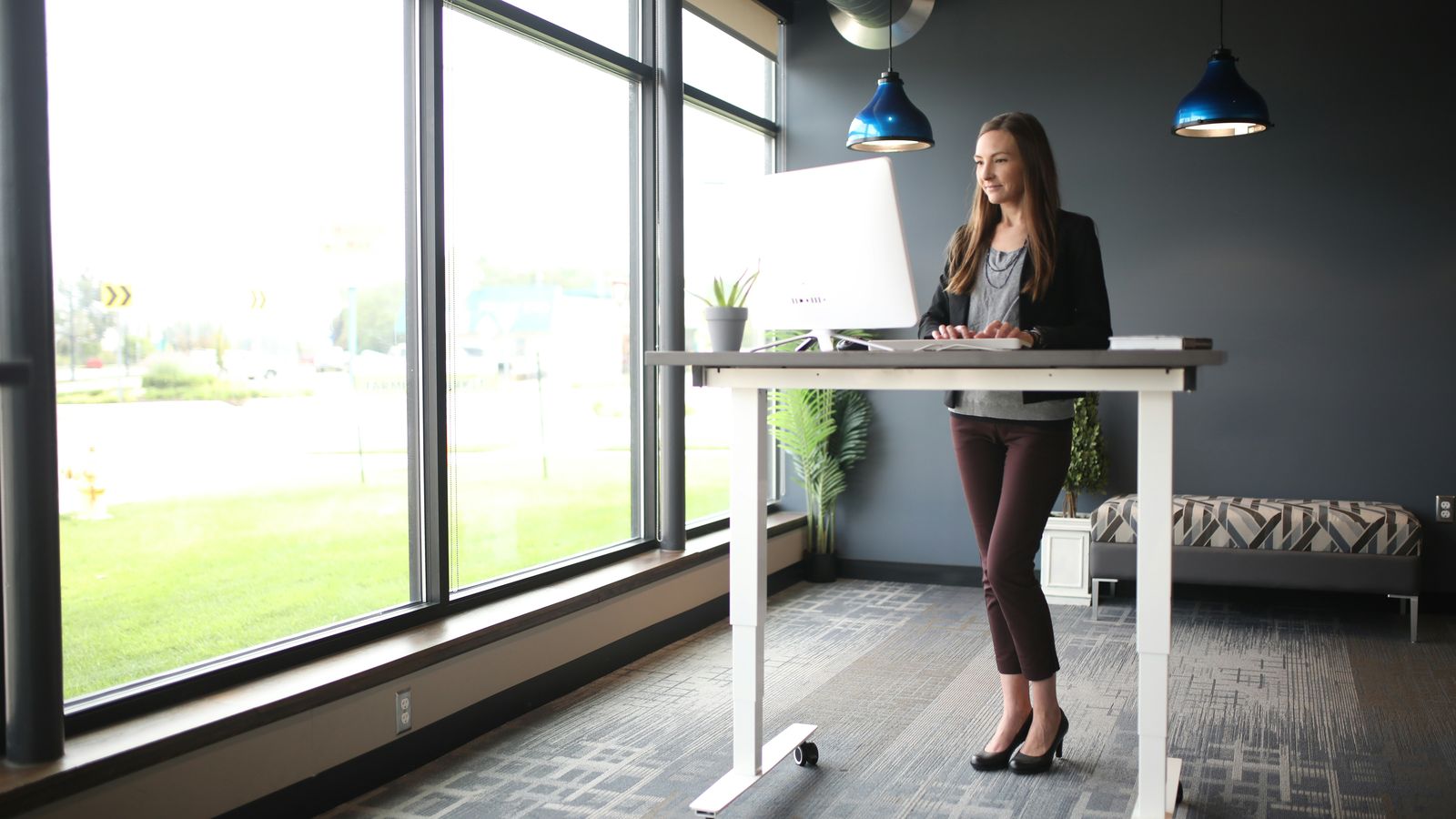
Standing desks get a lot of attention, so it's worth being clear about what they do and don't do. Standing burns slightly more energy than sitting and keeps more of your muscles gently engaged, and a sit-stand setup makes it easy to break up long sitting bouts. Ergonomics guidance generally treats standing as one tool for sitting less — alternating between sitting and standing rather than standing all day.
But the evidence that standing by itself delivers major health benefits is still limited and mixed, and standing rigidly in one spot for hours has its own downsides, from sore feet to lower-back fatigue. The honest summary: standing is better than sitting still, but it isn't the same as moving. A standing desk is most useful as a nudge to change posture and step away more often — not as a substitute for actual walking breaks. If you use one, shift your weight, alternate sit and stand through the day, and still get up to walk.
"Movement Snacks": The Small Stuff Adds Up
Not every break has to be a deliberate walk. A lot of the calories you burn in a day come from ordinary, incidental movement — what researchers call non-exercise activity thermogenesis, or NEAT: walking, standing, fidgeting, taking the stairs, carrying things. According to Harvard Health, drawing on the work of Mayo Clinic researcher Dr. James Levine, NEAT can vary between two similar-sized people by as much as 2,000 calories a day — and one study found leaner people simply stood and walked around two hours more per day than heavier people with similar jobs.
You can nudge your own NEAT up without "exercising": pace while you're on the phone, take the stairs, park farther away, or make yourself a little less efficient — putting things away on a different floor so you move more. Stacked across a day, these small choices do real work, and they're easier to sustain than a rigid routine.
How to Make Movement Breaks a Habit
Knowing to move is easy; remembering to do it during a busy day is the hard part. A few things that help:
- Set a cue you can't ignore. A timer or calendar reminder every 30 to 60 minutes is the simplest start. Many people find a recurring nudge is what finally makes it automatic.
- Anchor breaks to things you already do. Stand for every phone call, walk after every meeting, refill water on the hour. Tying movement to existing habits beats relying on willpower.
- Lower the bar. A two-minute walk you actually take beats a 20-minute one you keep postponing. Aim for frequent and small.
- Pair it with a stretch. When you get up, a quick stretch makes the break do double duty — our desk stretches guide covers a handful you can do at your chair in under five minutes.
Regular movement during the day pays off after hours, too: physical activity is linked to better sleep, which is part of why an active day and a good night go together. If that's something you're working on, see our guide to better sleep, and — since recovery happens largely overnight — how sleep and muscle recovery fit together. For winding down in the evening, our evening stretching routine is a gentle place to start.
A Note on Doing This Safely
Movement breaks are low-risk for most people — the whole point is gentle, frequent activity rather than anything strenuous. Build up gradually if you're not used to moving much during the day, wear comfortable shoes for walking breaks, and listen to your body. If you have a heart condition, a recent injury or surgery, joint problems, or any condition affected by activity, check with a healthcare provider before making bigger changes to how much you move.
Frequently Asked Questions
How often should I take a movement break at work? Aim to move for a few minutes every 30 to 60 minutes of sitting. Research suggests roughly five minutes of walking every half hour is a strong target, but the key principle is simply to break up sitting often — frequency matters more than the length of any single break.
Are standing desks actually good for you? They help mainly by making it easier to sit less and change posture. Standing burns a little more energy than sitting, but the evidence that standing alone delivers big health benefits is limited and mixed — and standing all day has its own drawbacks. Use a standing desk to alternate sitting and standing, and still take walking breaks.
Can movement breaks replace my regular workout? No — think of them as a complement. Breaking up sitting addresses a risk that exercise doesn't fully cancel out, but structured activity still has its own distinct benefits. Ideally you do both: move regularly through the day and get your weekly activity.
What if I can't leave my desk for long? Even very short breaks help. Stand up, walk to refill your water, or do a lap of the office. If you truly can't step away, a few seated or standing stretches and shifting your position still beat sitting frozen for hours.
Final Thoughts
A desk job doesn't have to mean hours of unbroken sitting. The research points to a simple, forgiving fix: get up and move for a few minutes, often — ideally a short walk every half hour or so, with standing and small "movement snacks" filling in the gaps. You don't need a standing desk or a new routine to start. Set one reminder, take one walk on your next call, and let frequency do the work.
This article is for informational purposes and is not medical advice. Talk to a healthcare provider before making significant changes to your activity, especially if you have an existing health condition.
Sources
- World Health Organization — Physical Activity (Fact Sheet)
- Columbia University Irving Medical Center — Rx for Prolonged Sitting: A Five-Minute Stroll Every Half Hour
- Mayo Clinic — Sitting Risks: How Harmful Is Too Much Sitting?
- Harvard Health Publishing — Use the NEAT Factor (Nonexercise Activity Thermogenesis) to Burn Calories
Related reading: If desk work leaves your neck and back aching, see why sitting causes neck and back pain.