

If you’re reading this at 11 PM with a coffee cup nearby and three browser tabs open, you’re already doing four things that are making tomorrow worse. Here’s the uncomfortable truth: most adults don’t have a sleep problem — they have a series of small daily habits that compound into one.
According to the CDC, more than one in three American adults consistently get less than seven hours of sleep. The cost shows up everywhere: foggy mornings, afternoon energy crashes, weakened immunity, weight gain, and a mood that turns from “fine” to “irritable” by 3 PM. The encouraging part? In nearly every case, the fix doesn’t require a prescription. It requires understanding what your body is actually doing at night and removing the things that interfere with it.
This guide pulls together the most reliable, research-backed natural strategies for better sleep in 2026 — organized by impact, easy to start tonight, and free of supplement-pill thinking. By the end, you’ll know exactly which habits move the needle and which ones are pure noise.
Why Sleep Quality Matters More Than Sleep Hours
Most people obsess over hitting eight hours. But two adults sleeping eight hours each can wake up in completely different conditions — one refreshed, the other exhausted. The difference is sleep architecture: how much time you spend in each sleep stage and how cleanly your body transitions between them.
Deep sleep (slow-wave sleep) repairs tissue, consolidates physical recovery, and supports immune function. REM sleep handles emotional processing and memory. If you’re fragmenting these stages — waking briefly every hour, snoring through deep sleep, or compressing REM by drinking alcohol before bed — your eight hours are functionally worth five.
The goal of every habit in this guide is the same: protect uninterrupted, deep sleep cycles so the time you spend in bed is actually doing something for you.
Understanding Your Sleep Cycle
Your body runs on a 24-hour internal clock called the circadian rhythm, controlled mainly by a tiny region in your brain called the suprachiasmatic nucleus (SCN). The SCN takes cues primarily from light. When morning light hits your eyes, it signals “daytime mode” — alertness chemicals like cortisol rise, body temperature climbs, and melatonin production drops. As evening approaches and light fades, the opposite happens: melatonin rises, core body temperature falls, and your body prepares for sleep.
Modern life disrupts this system constantly. Bright screens at 10 PM tell your brain it’s noon. Dim mornings indoors fail to send the “wake up” signal. Air conditioning keeps room temperature flat all day. The result is a confused internal clock that can’t decide when to release sleep hormones — which is why you feel wired at midnight and groggy at 8 AM.
Almost every natural sleep strategy works by reinforcing the signals your circadian rhythm needs. Get that right, and the rest falls into place.
12 Evidence-Based Habits for Better Sleep
These are listed in rough order of impact. Don’t try to implement all twelve at once — pick two or three to start, build the habit, then add more.
1. Get 10–15 Minutes of Morning Sunlight
The single highest-leverage habit on this list. Within 30–60 minutes of waking, get outside (not through a window — glass filters out the key wavelengths) and let natural light hit your eyes for 10–15 minutes. On cloudy days, double the time.
Morning light exposure anchors your circadian clock, advances melatonin release by about 14 hours later that evening, and dramatically improves sleep onset. People who add this single habit often report falling asleep 20–30 minutes faster within a week.
2. Set a Caffeine Cutoff at 2 PM
Caffeine has a half-life of about 5–6 hours, meaning a 3 PM coffee still has half its dose active in your bloodstream at 8 or 9 PM. Even if you can “fall asleep fine” after late caffeine, your deep sleep is measurably reduced.
A hard 2 PM cutoff works for most adults. Slow caffeine metabolizers (about 50% of people, based on the CYP1A2 gene) may need to cut off as early as noon.
3. Keep Your Bedroom Between 65–68°F (18–20°C)
Your core body temperature naturally drops by 1–2°F as you fall asleep. A cool room helps this happen; a warm room fights against it. Studies consistently show that bedrooms in the 65–68°F range produce better sleep efficiency.
If you can’t control AC, try a cooling mattress topper, breathable bedding, or a fan. A warm shower 60–90 minutes before bed also helps — the post-shower temperature drop mimics the natural pre-sleep cooling.
4. Build a 30-Minute Wind-Down Ritual
The brain doesn’t have an off switch. You can’t go from answering work emails to falling asleep in five minutes. A consistent wind-down ritual signals to your body that sleep is coming.
A good ritual takes 30–45 minutes and includes things like:
- Dimming the lights throughout your home
- Switching to a paper book or audiobook
- Doing 5 minutes of light stretching
- Drinking a warm, non-caffeinated beverage (herbal tea, warm water with lemon)
- Journaling the day’s wins or tomorrow’s three priorities
The exact components matter less than the consistency. Same activities, same order, every night.
5. Cut Bright Screens 60 Minutes Before Bed
Blue light from phones, tablets, and laptops suppresses melatonin production. Night mode and blue-light glasses help slightly, but they don’t fully solve the problem — the screen still emits enough light to keep your brain alert.
If you can’t go fully screen-free, the next best move is distance and dimness: hold the phone at arm’s length, lower brightness to minimum, and stop scrolling 30 minutes before bed.
6. Optimize Your Bedroom Environment
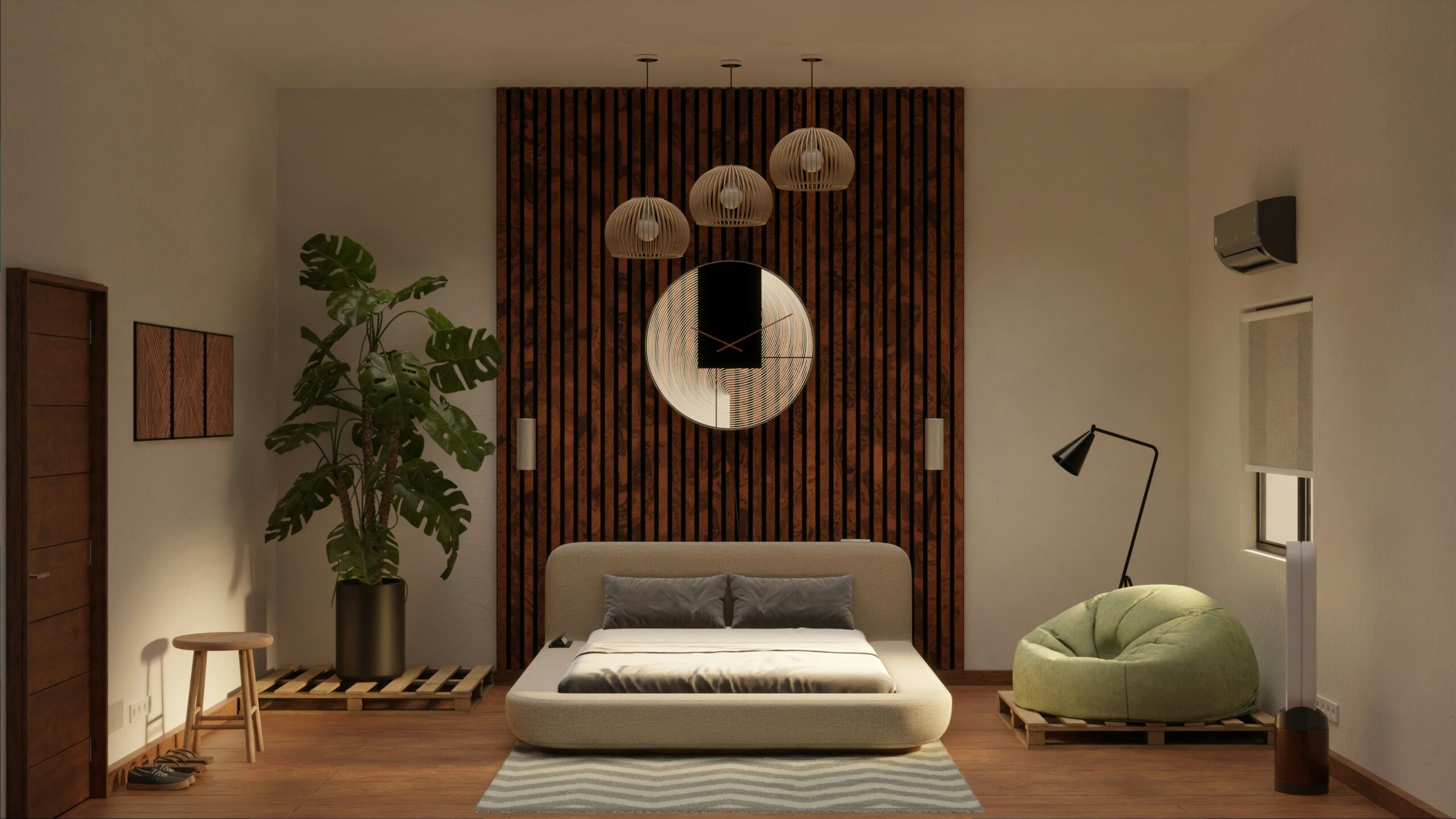
Your bedroom should be doing three things: cool, dark, and quiet.
- Dark: Blackout curtains, eye mask, or both. Even small light leaks from electronics can disrupt sleep stages.
- Quiet: Earplugs, white noise machine, or a fan. A consistent, low-volume background sound is often better than sudden silence.
- Free of work: Don’t work in bed. Your brain should associate the bedroom with sleep and intimacy only.
7. Stop Eating 3 Hours Before Bed
Eating late forces your digestive system to run while your body is trying to enter rest mode. This raises core temperature, spikes blood sugar, and can cause acid reflux that wakes you mid-sleep.
A 3-hour buffer between your last meal and bedtime is ideal. If you eat dinner at 7 PM, your last bite should be by 8 PM for an 11 PM bedtime.
8. Time Your Workouts Right
Exercise is one of the strongest natural sleep aids — but timing matters. Morning or early-afternoon workouts improve nighttime sleep significantly. Intense workouts within 2–3 hours of bed can backfire by raising body temperature and cortisol when your body wants the opposite.
If evening is your only option, aim for low-intensity movement (walking, yoga, light stretching) instead of high-intensity training.
9. Manage Stress Before Bed, Not In Bed
Lying in bed worrying about tomorrow is the most common cause of insomnia in adults. Your body interprets worry as a threat and triggers the same stress response that should be shutting down.
Two techniques that consistently help:
- The 4-7-8 breath: Inhale 4 seconds, hold 7 seconds, exhale 8 seconds. Three rounds slows heart rate and engages the parasympathetic nervous system.
- The “brain dump”: 5 minutes of writing every worry, task, or open loop in your head before getting in bed. This externalizes the mental load.
10. Keep a Consistent Sleep Schedule (Yes, on Weekends)
Going to bed at 11 PM weekdays and 2 AM Saturdays gives you a self-inflicted case of social jetlag. Your circadian rhythm doesn’t know it’s the weekend.
Aim to be in bed within a 60-minute window every night, including weekends. If you stayed up late on Friday, don’t try to “catch up” by sleeping until noon — get morning light at your usual time and take a 20-minute nap in the afternoon if needed.
11. Be Honest About Alcohol
Alcohol makes you fall asleep faster, then destroys the second half of your night. It suppresses REM sleep, increases nighttime awakenings, and worsens snoring and sleep apnea.
You don’t have to quit drinking. But if sleep quality matters to you, treat alcohol like caffeine: a meaningful dose, but with a cutoff. Most sleep specialists suggest stopping 3–4 hours before bed and limiting to one or two drinks.
12. Build a 5-Minute Mindfulness Practice
A short mindfulness or meditation practice before bed reduces sleep latency (time to fall asleep) and improves sleep quality across multiple studies. You don’t need a meditation app or a specific tradition.
The simplest version: lie down, close your eyes, and count slow breaths from 1 to 10. When your mind wanders (it will), start over at 1. Five minutes is enough.
Free Resource: 7-Day Sleep Reset Guide
Want to turn these 12 habits into a concrete plan? Download our free 7-Day Sleep Reset Guide — a day-by-day implementation roadmap with checklists, evening routine templates, and a sleep tracker.

7-Day Sleep Reset Guide
A day-by-day implementation roadmap that turns these 12 habits into a concrete plan. Includes evening routine templates, a sleep tracker, and 7 herbal & plant-based wellness tips most adults haven’t tried.
- Day-by-day habit stacking plan
- Evening routine template (printable PDF)
- Sleep tracker spreadsheet
- 7 plant-based wellness tips
 The guide drops next month. Want first access?
No spam, no upsells. Just the guide + an occasional wellness tip.
When You Should See a Doctor
Natural strategies work for most adults with mild to moderate sleep issues. But some sleep problems require professional evaluation. Talk to a doctor or sleep specialist if you experience:
- Loud, chronic snoring with daytime fatigue (possible sleep apnea)
- Difficulty falling or staying asleep for more than 3 nights a week, for over a month
- Unrefreshing sleep despite 7–8 hours in bed
- Excessive daytime sleepiness that interferes with daily function
- Restless legs sensations at night
- Significant mood changes alongside sleep changes
Sleep apnea in particular often goes undiagnosed and has serious cardiovascular consequences. A simple at-home sleep study can confirm or rule it out.
Frequently Asked Questions
How long does it take for natural sleep habits to start working?
Most people notice improvements within 3–7 days of consistent morning light exposure and caffeine timing changes. Deeper improvements typically take 2–4 weeks.
Are natural sleep aids safe to combine with prescription medications?
Always consult your doctor or pharmacist before combining any supplement or herbal product with prescription medication. Some natural products can interact with sedatives, blood thinners, and antidepressants.
What’s the single most impactful change for adults who struggle with sleep?
For most people, morning light exposure delivers the biggest improvement with the least effort. It costs nothing, takes 10–15 minutes, and works through one of the most robust pathways in human biology.
Is melatonin safe to take every night?
Melatonin is generally considered safe short-term, but most adults take doses far higher than necessary (1–3 mg is plenty). Long-term nightly use isn’t well-studied. It works better as a short-term tool for jet lag than a permanent solution.
How do I know if my sleep is actually improving?
Track three metrics for 4 weeks: time to fall asleep, number of nighttime wakings, and how rested you feel (1–10) upon waking. If all three improve, your strategy is working.
Final Thoughts
Better sleep isn’t about finding the one trick or supplement. It’s about removing the daily friction that disrupts your circadian rhythm, then building consistent signals that reinforce healthy sleep timing.
Start tonight with one habit. Morning sunlight tomorrow is a strong start. Add one new habit each week. Within 30 days, your sleep architecture — and how you feel during the day — will be noticeably different.
If you found this useful, grab the 7-Day Sleep Reset Guide above and we’ll walk you through implementation step-by-step.
This article is for informational purposes and not medical advice. Always consult a healthcare provider for persistent sleep concerns.
Read more in this series
- 7 Evening Routines That Improve Recovery
- 10 Sleep Hygiene Mistakes Most Adults Make
- How to Fall Asleep Faster: 9 Science-Backed Methods
- The Ideal Bedroom for Sleep
- Caffeine and Sleep: How Late Is Too Late?
- How Much Sleep Do You Really Need?
- Sleep and Muscle Recovery
- CBD and Sleep: What the Research Actually Says
Already tried the basics and curious about supplements? See our guide to the best CBD for sleep.
Related reading: If you tend to surface in the small hours, see why you wake up at 3 AM and how to get back to sleep.
Related guides: Learn how menopause affects sleep and what helps, and whether CBN, the “sleepy cannabinoid,” really works.