7 Evening Routines That Improve Recovery (Backed by Science)

81 Views
SaveSavedRemoved 0
You don’t recover during the day. You recover at night — but only if your evening routine actually lets your body switch out of “go mode” and into “repair mode.”
Here’s the problem: most adults treat evening as the leftover time after work is done. They scroll on their phone until they’re tired enough to crash, eat dinner too late, and wonder why they wake up feeling like they barely slept. The body wants to shift into recovery, but the environment keeps signaling “stay alert.”
A well-designed evening routine doesn’t have to be 90 minutes long or include candles, baths, and a 17-step skincare protocol. The most effective ones are short, repeatable, and built around a single principle: lower the activation level of your nervous system before bed. Below are 7 evening habits that consistently show up in the recovery and sleep science literature, ranked by impact.
If you’re new to this and want a deeper foundation on sleep itself, start with our Complete Guide to Better Sleep Naturally. The 7 routines below sit on top of that base.
Why Evening Routines Matter for Recovery
Recovery isn’t a single switch — it’s a cascade. Your body needs three things to drop into deep recovery:- A lowered stress hormone profile (cortisol down, melatonin up)
- A drop in core body temperature (~1°F)
- Parasympathetic nervous system activation (the “rest and digest” mode)
1. Dim Ambient Lighting 60–90 Minutes Before Bed
If you do nothing else from this list, do this one. Your body uses light intensity as the primary cue to release melatonin. Bright overhead lighting at 10 PM tells your brain “it’s still daytime.” The fix is simple: when the sun sets, switch from overhead lighting to low, warm-tone lamps. Aim for under 100 lux in your living room within an hour of sunset. Practical setup:- Use 2700K (warm white) or 2200K (very warm) bulbs in your bedroom and living room
- Add smart bulbs or smart plugs that auto-dim at sunset
- Install bias lighting behind your TV if you watch evening media
- Avoid the bathroom mirror lights right before bed — they’re typically 5000K (cool white) and as bright as midday
2. Tech-Free Buffer for the Final Hour
You can’t reduce stimulation and watch TikTok at the same time. The final 60 minutes before bed should be screens off, phones away — or at minimum, screens dimmed and on Do Not Disturb. Why this works: late-evening screen use does two things simultaneously. It exposes you to short-wavelength blue light (which suppresses melatonin) and floods your brain with stimulating content (which activates your default mode network and racing thoughts). Both fight against the cortisol drop your body is trying to make. If a full hour feels impossible, start with 30 minutes. Read a paperback, listen to a podcast at low volume, talk with someone you live with, or just sit. Boredom is part of the goal — it’s the precursor to drowsiness.3. Light Mobility or Stretching (10 Minutes)
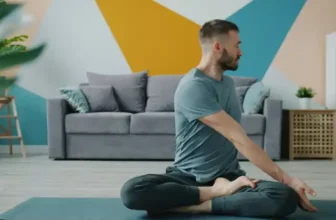
Not a workout. A slow movement session — gentle stretching, foam rolling, or restorative yoga poses. Research on evening mobility consistently shows two effects: it activates the parasympathetic nervous system (lowering heart rate and breathing rate) and it releases residual physical tension from the day. People who sit at desks accumulate hip flexor tightness, neck tension, and lower back stiffness — all of which contribute to nighttime restlessness. A simple 10-minute sequence that works for most adults:- 2 minutes: cat-cow stretches and gentle spinal rotation
- 3 minutes: hip flexor and hamstring stretches
- 2 minutes: child’s pose and forward fold
- 3 minutes: legs-up-the-wall pose (deeply parasympathetic)
4. Warm Shower or Bath 60–90 Minutes Before Bed
This is the temperature trick most people miss. A warm shower 60–90 minutes before bed doesn’t help because warmth is sedating — it helps because of what happens after you get out. When you step out of a warm shower, your body sheds heat rapidly through dilated blood vessels in your hands and feet. Your core temperature drops faster than it would otherwise — and that temperature drop is one of the strongest physiological triggers for sleep onset. Optimal protocol:- Water temperature: 104–108°F (40–42°C) — warm enough to feel relaxing, not scalding
- Duration: 10–15 minutes
- Timing: end the shower 60–90 minutes before lights out
- After: dry off, change into loose breathable clothes, keep the bedroom cool (65–68°F)
5. The 5-Minute Brain Dump
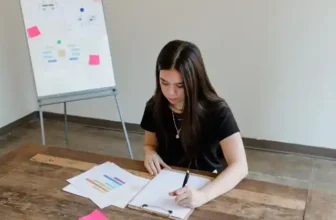
If your brain keeps spinning the moment your head hits the pillow, you have a mental load problem, not a sleep problem. Trying to fall asleep with unprocessed tasks and worries is like trying to close a browser with 40 tabs open — your brain refuses. The fix is a 5-minute writing exercise, ideally 30–60 minutes before bed: Page 1 — the dump: Write every open thought without editing — work tasks, errands, worries, half-formed ideas, conversations you wish you’d handled differently. Don’t structure it. Just empty the buffer. Page 2 — tomorrow’s top 3: Pick the three things you actually want to focus on tomorrow. Just three. Closing this list signals to your brain that the day has been “handled” — the unfinished items are now external, not internal. Studies on bedtime journaling show measurable improvements in sleep onset latency (the time it takes to fall asleep), particularly for adults who score high on rumination or work-related anxiety.6. A Slow, Warm Herbal Ritual
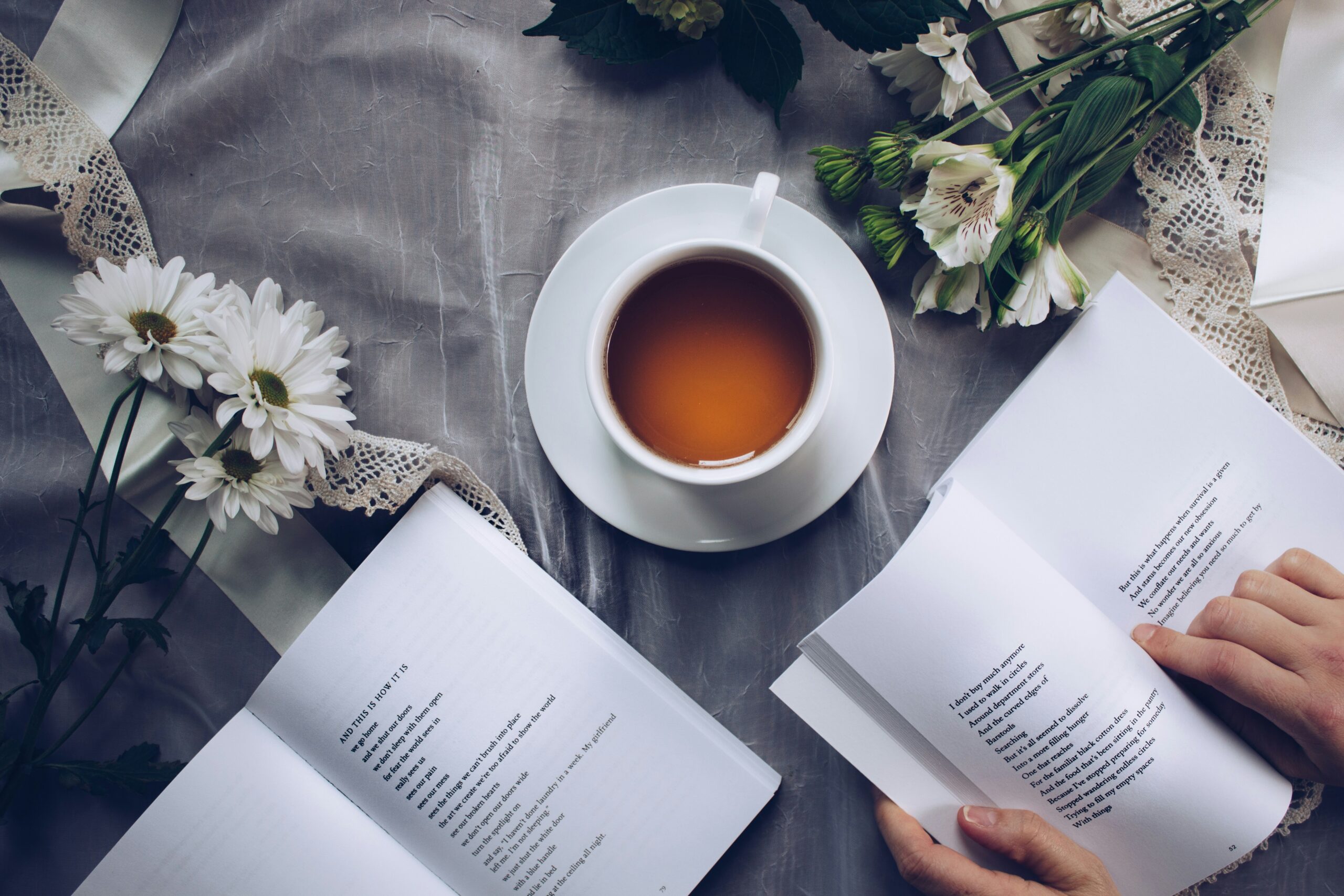
The herbal tea itself matters less than the ritual around it. Choosing a mug, boiling water, smelling the steam, sipping slowly — all of these activate the parasympathetic system through deliberate, low-arousal sensory input. Good evening herbal options:- Chamomile — mild calming effect, well-studied for relaxation
- Lemon balm — gentle nervous system soothing, pairs well with chamomile
- Passionflower — slightly stronger sedative profile, good for anxious evenings
- Valerian root — earthier flavor, more potent (skip if you take sedatives or sleep medications without checking with your doctor)
- Rooibos — naturally caffeine-free, rich, satisfying as a “real drink” substitute
- Warm water with lemon and a touch of honey — minimal but effective
7. Slow Breathing for 3–5 Minutes Before Sleep
Specific breathing patterns can shift your nervous system from sympathetic (alert) to parasympathetic (rest) within minutes. Two methods consistently outperform the rest: The 4-7-8 breath:- Inhale through the nose for 4 seconds
- Hold for 7 seconds
- Exhale slowly through the mouth for 8 seconds
- Repeat 4 rounds
- Inhale 4 seconds
- Hold 4 seconds
- Exhale 4 seconds
- Hold 4 seconds
- Repeat 8–12 rounds
Common Mistakes That Sabotage Recovery
- Eating dinner after 9 PM — disrupts the core body temperature drop and forces digestion during sleep
- Late evening alcohol — falls asleep faster but destroys REM sleep in the second half of the night
- High-intensity workouts within 2–3 hours of bed — keeps cortisol elevated when it should be falling
- Going to bed at wildly different times across the week — confuses your circadian rhythm
- Working in bed — trains your brain to associate the bedroom with stress, not sleep
- Checking email or work Slack after dinner — every notification re-spikes your alertness
📩
7-Day Sleep Reset Guide
Want a printable evening routine template you can stick on your fridge? Our free guide includes a customizable wind-down checklist, sleep tracker, and 7 herbal & plant-based wellness tips most adults haven’t tried.
- Customizable evening routine template (printable)
- Sleep tracker spreadsheet
- 7-day habit stacking plan
- 7 plant-based wellness tips
📬 The guide drops next month. Want first access?
Notify me when it’s ready →No spam, no upsells. Just the guide + an occasional wellness tip.
Frequently Asked Questions
How long should an evening routine be? 30–60 minutes total is the sweet spot. Shorter than 30 and your nervous system doesn’t have time to downshift. Longer than 90 and most people stop being consistent. Start at 30 minutes and only add habits you’ll actually keep doing. What time should I start my evening routine? Work backwards from your target bedtime. If you want to be asleep by 11 PM, start dimming lights and stepping away from screens around 9:30 PM. The exact time matters less than the consistency. Do I really need to do all 7 every night? No. Pick 3 to start with — ideally dim lighting, tech-free buffer, and breathing. Add the others one at a time over 4–6 weeks. Stacking too fast leads to burnout and dropout. Is melatonin a shortcut for any of this? Melatonin can help short-term, especially for jet lag or shift work, but it doesn’t replace the underlying environmental cues. A dark room with no screens beats melatonin alone. Talk to your doctor before regular use, especially with other medications. What if I work late shifts? The same principles apply, just time-shifted. The key is consistency: same wind-down ritual, same dim lighting, same routine — applied to your sleep window, not the clock on the wall.Final Thoughts
Recovery isn’t a hack. It’s the natural state your body wants to drop into every night — if you stop interrupting it. The 7 routines above don’t add anything to your evening; they remove the friction that keeps your nervous system in alert mode. Start with one habit tonight. Pick the easiest one — dim lighting, or 5 minutes of slow breathing in bed — and do it for a week. Then add another. Within 30 days, your evenings will feel like a slow exhale, and your mornings will reflect it. If you found this useful, you’ll probably want the Complete Guide to Better Sleep Naturally — it covers the foundational habits this routine sits on top of.This article is for informational purposes and not medical advice. Always consult a healthcare provider for persistent sleep or recovery concerns.
Related: A good routine only works if you’re not undoing it — see the 10 sleep hygiene mistakes most adults make and the easy fix for each.