Movement and Mobility: A Complete Guide for People Who Sit All Day

Most of us spend our days in a chair — commuting, working at a screen, eating, then relaxing in front of another screen. It feels harmless because it's comfortable, but a growing body of research shows that long, unbroken hours of sitting take a quiet toll on the body, and that even a solid daily workout doesn't fully undo it. The encouraging part is that the fix doesn't require a gym membership or a personality transplant — just more movement, spread through the day, in small and doable ways.
This guide pulls the whole picture together: what sitting does to your body, why exercise alone isn't enough, and the three simple habits that counter it — moving often, stretching what tightens, and winding down. Think of it as the map; each section links to a deeper how-to guide when you want the step-by-step.
Key Takeaways
- Prolonged sitting is its own risk factor — linked to poorer metabolic and heart health — and the stiffness and aches build up separately from how much you exercise.
- A daily workout doesn't fully cancel it out. Research on "active couch potatoes" shows people who hit their exercise targets but sit most of the rest of the day still carry higher risk.
- The fix is three habits: move often (short breaks), stretch what tightens (neck, hips, back), and wind down in the evening.
- Aim for the basics: 150–300 minutes of activity a week, plus breaking up sitting every 30–60 minutes — frequency matters as much as the workout.
- Staying mobile is a long game: regular movement helps protect range of motion and independence as you age.
What Too Much Sitting Does to Your Body
It helps to know what you're up against. Sitting itself isn't dangerous — it's the amount and the uninterrupted nature of it that cause problems, and they show up on two fronts.
Metabolic and heart health. The World Health Organization notes that higher amounts of sedentary behavior in adults are associated with increased all-cause mortality, cardiovascular disease, and type-2 diabetes — which is why its guidelines now explicitly tell adults to limit the time they spend being sedentary, not just to exercise more. The Mayo Clinic makes the same point: too much sitting has been linked to obesity and metabolic syndrome and appears to raise the risk of heart disease — though staying physically active offsets much of that risk.
Muscles and joints. This is the part you feel by mid-afternoon. When you sit for hours, your hip flexors and hamstrings stay shortened and gradually tighten, while a typical desk posture rounds the shoulders forward and pushes the head toward the screen. As Harvard Health notes, that prolonged sitting can stiffen the joints and even affect your gait and balance over time. The result is the familiar package: tight hips, a stiff neck, an achy lower back, and a body that feels locked up when you finally stand.
None of this means sitting is a moral failing or that you need to stand all day. It just means the long, unbroken stretches are worth interrupting.
Why Exercise Alone Isn't Enough
Here's the part that surprises people: you can do everything "right" with exercise and still carry the risks of too much sitting.
A Harvard-led study of nearly 90,000 adults, published in late 2024 and summarized by Harvard Health, found that getting the recommended 150 minutes of moderate-to-vigorous activity each week clearly improved health — but among the people who hit that target, those who were the most sedentary the rest of the time still had a greater risk of heart failure and of dying from heart disease than those who sat less. As the article points out, 150 minutes a week is only about 2–3% of your waking hours; what you do with the other 97% matters too.
Researchers have a nickname for this: the "active couch potato" — someone who exercises but otherwise sits most of the day. The takeaway isn't that exercise doesn't matter; it absolutely does. It's that a workout and an active day are two different things, and you need both. The good news is that breaking up sitting is far easier than fitting in another workout.
The Three Habits That Counter Sitting
Almost everything useful you can do about sitting falls into three simple habits. Together they make up the rest of this guide — and each links to a full how-to when you want the details.
1. Move Often
The single most effective habit is also the simplest: get up and move for a few minutes, regularly. In one Columbia University study, five minutes of walking every 30 minutes of sitting was enough to meaningfully lower blood sugar and blood pressure compared with sitting all day. You don't have to be precise about it — a lap to refill your water, a walking phone call, standing up between tasks. Frequency matters more than duration.
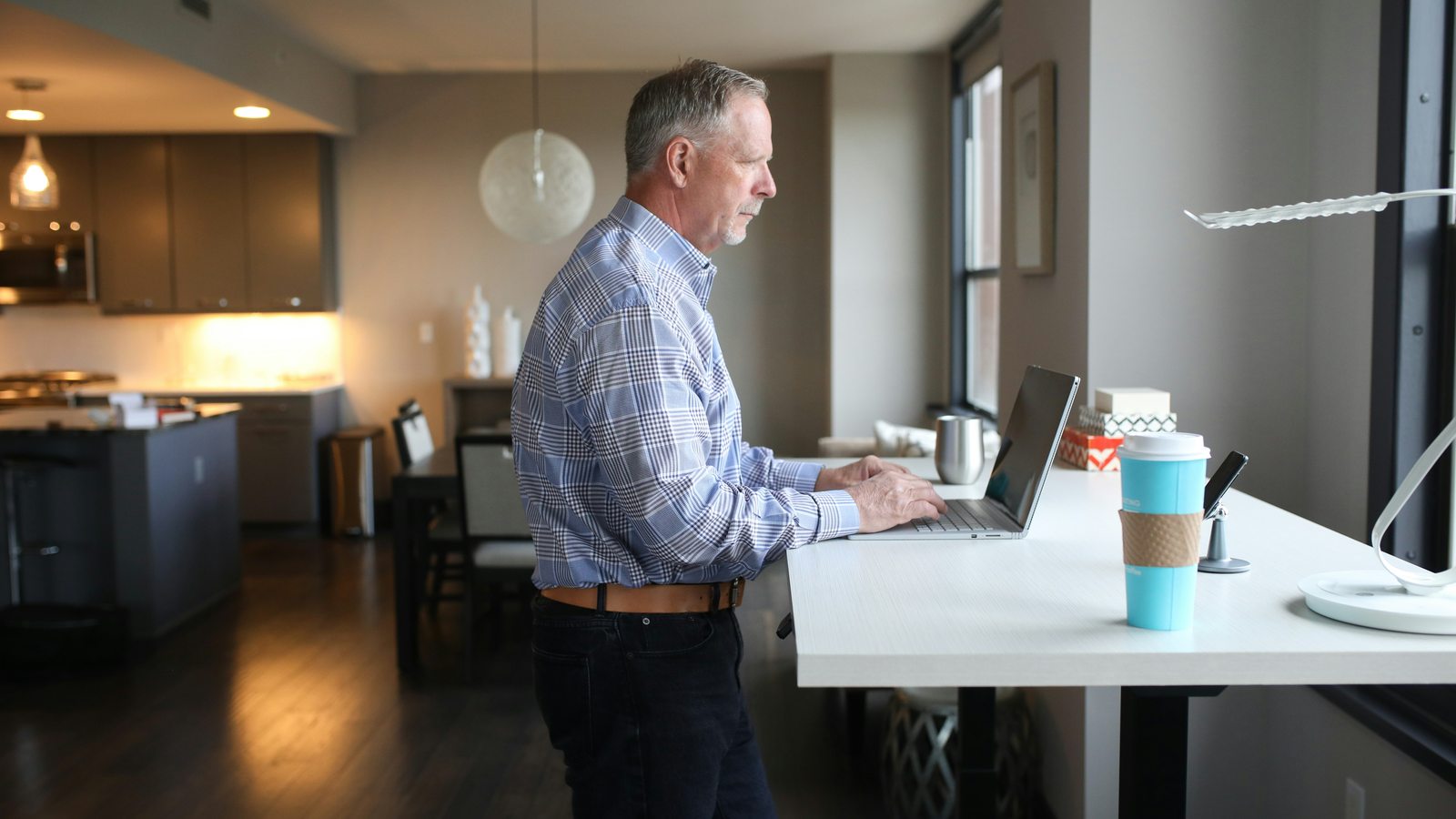
This is the highest-leverage change for most desk workers, and it's worth its own playbook: see our guide to movement breaks at work for how often to move, how to fit walks into a workday, and where standing desks actually help.
2. Stretch What Tightens
Moving more keeps you from seizing up; targeted stretching undoes the tightness that sitting has already built. The areas a desk hits hardest are predictable — the neck and shoulders from screen posture, the chest from rounding forward, and the hips and lower back from hours in a chair. A few minutes of stretching, a few times a day, keeps those areas loose without a mat or a gym.
Our desk stretches guide walks through the most useful moves grouped by body area, plus a quick five-minute routine you can run at your chair.
3. Wind Down in the Evening
The third habit closes the loop at the end of the day. A gentle evening stretch or mobility routine helps release the tension that's accumulated, and it pairs naturally with better rest — movement and recovery work together, and much of your physical repair happens overnight. Our evening stretching routine is a simple, low-effort sequence to wind down with, and it connects to how sleep and muscle recovery reinforce each other.
How Much Movement Do You Actually Need?
Two numbers cover most of it.
For overall health: 150–300 minutes a week. The WHO recommends adults get 150–300 minutes of moderate-intensity activity (or 75–150 minutes of vigorous activity) per week, plus muscle-strengthening twice a week. Brisk walking counts. So does anything that gets you moving — the guidelines emphasize that any activity is better than none.
For breaking up sitting: every 30–60 minutes. Separate from your weekly exercise, aim to interrupt long sitting bouts with a minute or few of movement every half hour to hour. This is where the Columbia research and the "active couch potato" findings converge: the workout takes care of one kind of risk, and breaking up sitting takes care of another.
Beyond those, there's a bonus layer: NEAT — non-exercise activity thermogenesis, the energy you burn through everyday movement like walking, standing, taking the stairs, and fidgeting. According to Harvard Health, NEAT can vary between two similar-sized people by as much as 2,000 calories a day. You can nudge yours up without "exercising" at all — pacing on calls, parking farther away, taking the stairs.
Building a Realistic Daily Routine
You don't need to do all of this perfectly. Here's what a doable day looks like for someone who sits for work:
- Morning: a short walk or your weekly workout if that's when you train. Even a 10-minute walk counts toward the weekly total.
- Through the workday: set a cue — a timer, or tying it to existing habits — to stand and move for a minute or two every 30 to 60 minutes. Take calls on your feet. Do one or two desk stretches when you get up.
- Midday: a longer walk if you can — a lunch loop does double duty for movement and a mental reset.
- Evening: a few minutes of gentle stretching to release the day's tension before bed.
The point isn't a rigid schedule; it's weaving small amounts of movement through the hours you'd otherwise sit straight through. Start with the one habit that's easiest for you and build from there — consistency beats intensity every time.
Staying Mobile Over the Long Run
Movement isn't only about today's stiffness; it's about keeping your range of motion and independence as the years add up. Joint mobility naturally declines with age, but how active you are strongly influences how fast. Staying physically active helps preserve flexibility, balance, and everyday function — the ability to reach, bend, and move without thinking about it.
That's the quiet case for building these habits now rather than later: the desk worker who takes movement breaks and stretches in their 30s and 40s is investing in the mobility they'll still have in their 60s and 70s. You're not just undoing today's tight hips — you're protecting tomorrow's.
Common Myths Worth Clearing Up
- "I work out, so I'm covered." The most stubborn myth, and the one the active-couch-potato research directly contradicts. A workout is great; it doesn't license eight unbroken hours in a chair.
- "A standing desk fixes everything." Standing is better than sitting still, but it isn't the same as moving, and the evidence for standing alone is limited and mixed. Use it to change posture and step away more — not as a substitute for walking breaks.
- "Stretching is a waste of time if I'm not flexible." The goal isn't doing the splits; it's reversing the specific tightness sitting creates and keeping comfortable range of motion. A few targeted stretches deliver most of the benefit.
- "I need a big block of time." You don't. The whole premise here is that small amounts, spread out, do the heavy lifting.
When to Check With a Professional
Movement and gentle stretching are low-risk for most people, but use common sense. Ease into new activity gradually if you're not used to it, and stop anything that causes sharp or lasting pain. If you have an existing injury, recent surgery, a heart condition, joint problems, or persistent pain, check with a healthcare provider or physical therapist before starting a new routine — they can tailor it to you.
Frequently Asked Questions
Is sitting really that bad if I exercise regularly?
Exercise is genuinely protective, but research shows that prolonged sitting carries risks of its own that a workout doesn't fully erase. People who meet activity guidelines but sit most of the rest of the day still tend to have worse outcomes than those who sit less. The fix is to do both: keep exercising and break up your sitting.
How often should I get up from my desk?
A good target is to move for a minute or a few every 30 to 60 minutes. You don't need a full routine each time — standing, walking to refill water, or a couple of stretches all count. Frequency matters more than how long each break is.
Do I need special equipment or a gym?
No. The core habits — walking breaks, desk stretches, an evening wind-down — need no equipment. A standing desk can help you sit less, but it's optional and not a replacement for actually moving.
What's the single most important thing to start with?
Breaking up sitting with short, frequent movement. It's the easiest habit to add and has the strongest evidence behind it for desk workers. Start there, then layer in stretching.
Final Thoughts
A desk job doesn't have to cost you your health or your mobility — but it does ask you to be deliberate about moving, because the default is stillness. The research points to a forgiving, low-effort fix: exercise when you can, break up your sitting often, stretch what tightens, and wind down at night. None of it requires a dramatic overhaul. Pick the one habit that's easiest to start, anchor it to something you already do, and let it build. Your afternoon stiffness — and your future self — will thank you.
This article is for informational purposes and is not medical advice. Stop any activity that causes pain, and consult a healthcare provider before starting a new routine, especially if you have an existing health condition.
Sources
- World Health Organization — Physical Activity (Fact Sheet)
- Harvard Health Publishing — Does Exercise Offset the Risks of Sitting?
- Harvard Health Publishing — The Dangers of Sitting
- Harvard Health Publishing — Use the NEAT Factor to Burn Calories
- Mayo Clinic — Sitting Risks: How Harmful Is Too Much Sitting?
- Columbia University Irving Medical Center — Rx for Prolonged Sitting: A Five-Minute Stroll Every Half Hour
Related reading: If sitting leaves you with a stiff neck or an aching back, see why it happens and how to relieve it.
Related reading: Why you feel stiffer and achier as you get older — and what actually helps.