
8 min read · Last reviewed June 2026
You bend down to tie your shoes and notice it. You get out of bed and your first few steps are careful ones. A weekend of yard work leaves you sore for three days instead of one. None of it is dramatic — you’re just stiffer and achier than you used to be, and you bounce back slower.
If that sounds familiar, you’re noticing one of the most universal experiences of getting older. The reassuring part is that very little of it is fixed. A good amount of the stiffness and slow recovery that creeps in through your 40s, 50s, and beyond comes from changes you can influence — how much you move, how strong you stay, and how you handle the achy days. This guide explains what’s actually happening in your joints and muscles as you age, and walks through what genuinely helps, from the habits that do the heavy lifting to the comfort tools for a rough day.
This article contains affiliate links. If you buy through one, we may earn a commission at no extra cost to you. See our affiliate disclosure. It doesn’t change what we recommend.
Key Takeaways
- Stiffness with age is mostly explainable, not inevitable. Joints lose some lubrication and muscles slowly shrink — but how you live shifts both more than your birthday does.
- “Motion is lotion.” Movement circulates the fluid that keeps joints gliding, which is why the stiffest people are often the most sedentary ones.
- Strength is the long game. Keeping (or rebuilding) muscle through resistance training is the single best-supported way to stay mobile and ease everyday aches as you age.
- Recovery basics still matter — sleep, sensible activity, and time do more for soreness than any product.
- Relief tools are a real but secondary layer. Heat, gentle movement, and topical rubs can ease a stiff, achy day while the habits do the real work.
- See a doctor if stiffness lasts more than an hour most mornings, or comes with swelling, redness, or pain that won’t settle.
Why Stiffness and Soreness Creep In With Age
There isn’t one switch that flips. A few gradual changes stack up, and together they explain most of what you feel.
Your joints lose a little lubrication
Your joints come with a built-in lubricant called synovial fluid — the slippery substance that lets bones glide smoothly inside a joint. When you move, that fluid circulates and keeps everything working. When you rest, as Cleveland Clinic explains, the fluid sits and thickens — sometimes called “morning gel” — so your first movements after sleeping or sitting feel creaky until it thins out again.
That happens at any age. But as you get older, the feeling tends to become more common and linger a little longer, partly because the body makes less synovial fluid over time. It’s why the stiffness you shrugged off at 25 is more noticeable at 55.
You’re slowly losing muscle
The bigger driver is happening in your muscles. According to the National Institute on Aging, muscle mass and strength typically peak around age 30 to 35, then decline — slowly and steadily at first, and faster after about 65 in women and 70 in men. This gradual loss of muscle and strength is called sarcopenia, and while it’s most associated with older adults, the NIA notes it can begin in middle age.
Less muscle means less support around your joints and spine, less power for everyday tasks, and more of that “everything feels harder” sensation. It also helps explain slower recovery: weaker, less-conditioned muscles take longer to bounce back from a long day or a burst of activity.
And you probably move less than you used to
This is the quiet multiplier. Desk jobs, longer commutes, and busier years tend to squeeze out daily movement — and less movement accelerates exactly the changes above. Muscle loss is strongly tied to inactivity, and joints that don’t move regularly stiffen faster. The result is a loop: you’re stiff, so you move less, which makes you stiffer. The good news is that the loop runs both ways, and you can reverse the direction.
When Stiffness Is Normal — and When to Get It Checked
Some morning creakiness after rest is normal at any age, and it should ease fairly quickly once you start moving. Cleveland Clinic’s rule of thumb is useful: if joint stiffness lasts an hour or more most mornings, that’s a signal worth taking to a healthcare provider, because longer-lasting stiffness can point to inflammatory conditions like rheumatoid arthritis rather than ordinary wear.
So the everyday stiffness this article is about — the kind that loosens within minutes of moving — is the kind you can largely manage yourself. Persistent, one-sided, or worsening stiffness is a different conversation, and we cover the warning signs near the end.
What Actually Helps — Starting With the Biggest Lever
The fixes follow directly from the causes. None of them is a gadget or a supplement; the things that work most are the things you do.
Keep moving (this is the foundation)
If you change one thing, move more often. Cleveland Clinic puts it simply: motion is lotion. Moving circulates synovial fluid and keeps joints working efficiently, which is why staying active is the first-line advice for stiffness. You don’t need a workout for this — standing up regularly, walking, and avoiding long unbroken stretches of sitting all count. Our guides to taking movement breaks and simple desk stretches give you easy, no-equipment ways to break up a sedentary day.

Build (or keep) your strength
If movement is the foundation, strength training is the long game — and it’s the best-supported defense against age-related decline. The National Institute on Aging is direct about this: while you can’t fully stop the clock, the average loss of muscle and strength with age can be substantially slowed by staying active, and many older adults can actually increase their strength with exercise, helping them keep mobility and independence.
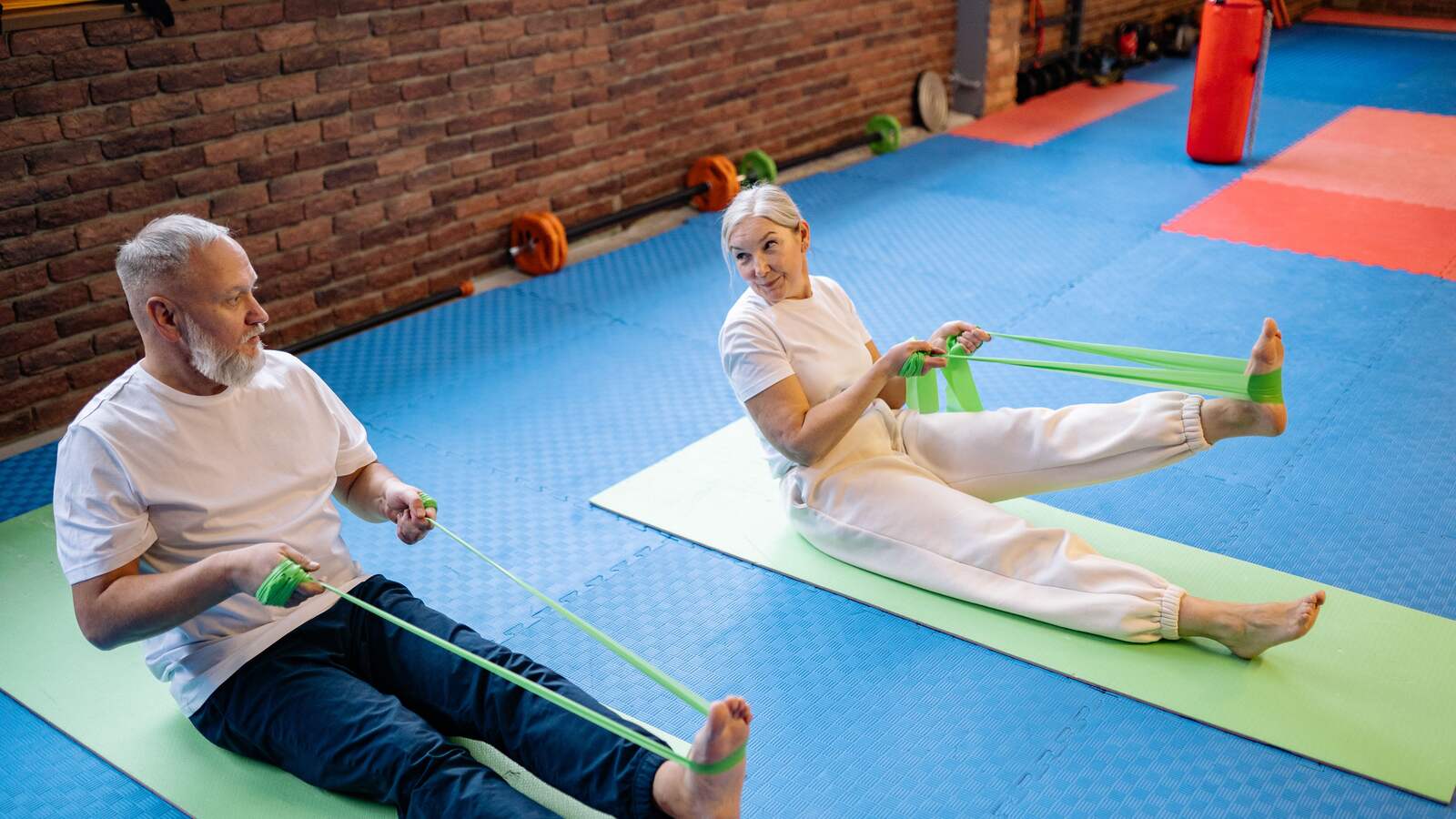
Strength or resistance training doesn’t mean heavy barbells. The NIA includes bodyweight moves like squats and push-ups, resistance bands, and light dumbbells. Its researchers found the best recipe for staying functional is a combination of walking and resistance training, with a general target of about 150 minutes of moderate activity a week plus strength work one to two times a week — while noting you see benefits even below that. Stronger muscles support your joints, take strain off your back, and shorten how long everyday activity leaves you sore. For the full picture of why daily movement beats the occasional workout, see our complete guide to movement and mobility for people who sit all day.
Warm up and stretch what stiffens
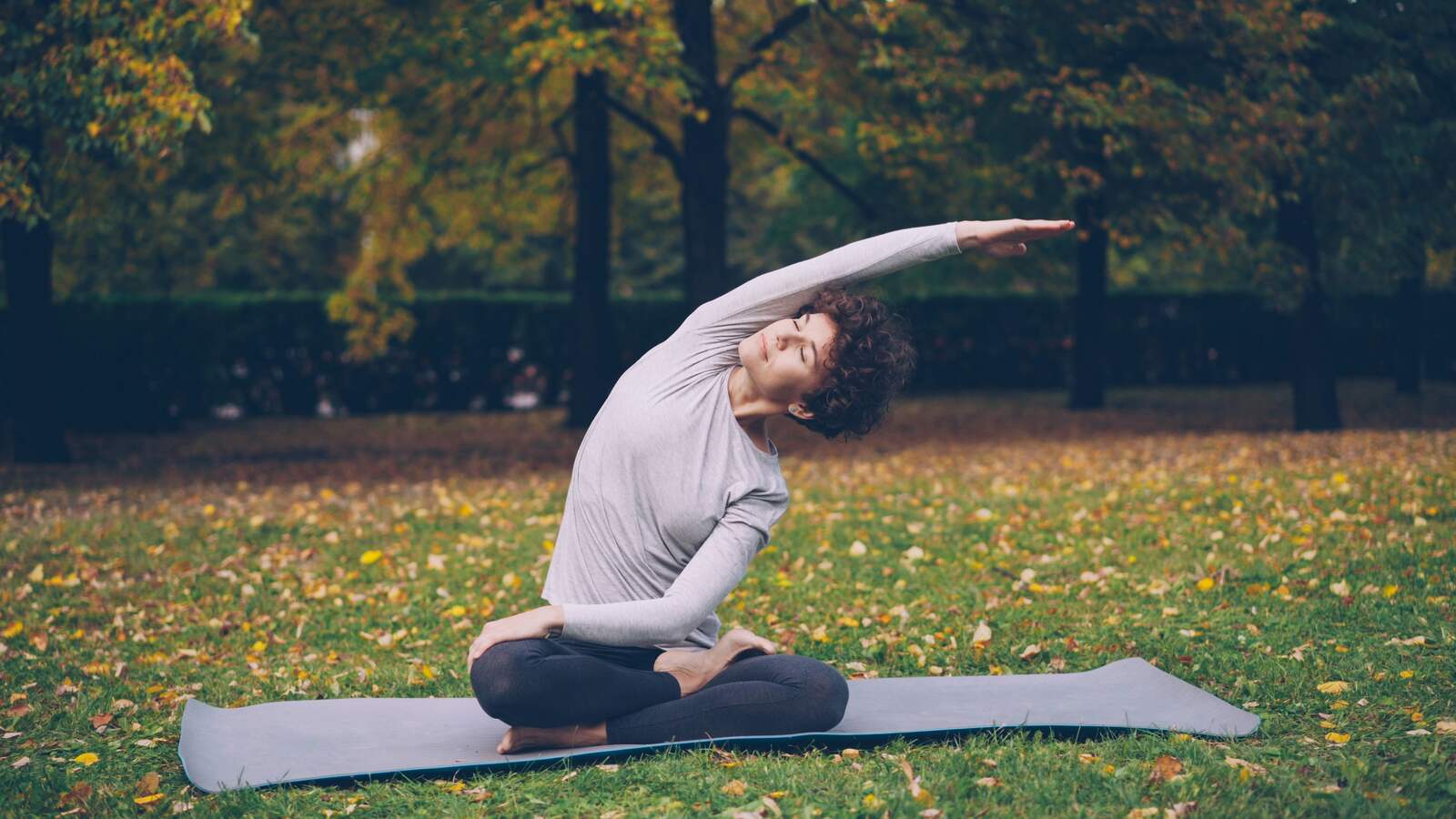
A short, regular mobility routine does more than one long stretch session. Gently moving your joints through their range — neck, shoulders, hips, ankles — in the morning or before activity helps shake off the “morning gel” faster and prepares stiff tissue for movement. The goal isn’t gymnast flexibility; it’s undoing the positions that daily life locks you into. Our desk stretches guide covers gentle options you can start with.
Don’t skip the recovery basics
Recovery slows with age, but you can support it. Sleep is when a lot of muscle repair happens, so chronically short nights show up as lingering soreness — our guide to sleep and muscle recovery explains the link. Beyond sleep, the unglamorous fundamentals still rule: staying hydrated, not ramping up activity too fast, and giving a hard effort a day to recover before repeating it. There’s no shortcut that outperforms consistent movement plus real rest.
In-the-Moment Relief for a Stiff, Achy Day
Habits prevent stiffness over weeks and months. But some days you wake up locked up, or a big effort leaves you sore now. These ease the moment:
- Heat relaxes tight muscles and gets blood flowing — a warm shower, bath, or heat pack often loosens a stiff morning or a sore lower back.
- Gentle movement almost always beats sitting still; an easy walk or light mobility work keeps things from seizing up.
- Topical rubs can take the edge off one sore spot while you keep moving (more on these below).
When Immediate Relief Makes Sense
Everything above is the real fix: move often, build strength, stretch, and protect your sleep. That’s what changes your months and years. But correcting the underlying causes takes time — and some days you don’t have time. Your knees are stiff before a trip, your back is sore after the garden, and you want a little comfort right now.
Those moments are exactly where short-term relief earns its place. Reaching for comfort on an achy day isn’t abandoning the real solution — it’s getting through a rough morning while the habits keep doing their slow work in the background. The trick is keeping the order straight: relief tools ease how you feel, they don’t rebuild muscle or re-lubricate a joint. Use them as a layer on top of the fundamentals, never a replacement. With that framing, a topical can be a reasonable, low-risk option when one specific area is sore.
What about topical CBD balms?
Hemp and CBD balms are heavily marketed for sore, stiff muscles and joints, so it’s worth an honest look. The appeal is real: applied to the skin, CBD acts locally and doesn’t enter the bloodstream in meaningful amounts, which gives topicals a low side-effect profile. The catch is effectiveness. As the Arthritis Foundation puts it, whether topical products actually deliver CBD below the skin to a joint or muscle isn’t clear — a few small trials of transdermal CBD reported less hand pain while another found no benefit. Complicating things further, many CBD balms also contain menthol or camphor, which relieve pain on their own, so it’s hard to know whether any soothing comes from the CBD at all.
The honest summary: the evidence for CBD and recovery is early and mixed. Some people find a topical genuinely soothing as part of a routine; it hasn’t been proven to do more than that, and reactions vary. We lay out the full picture — oral vs. topical, dosing, and safety — in our guide to CBD for muscle recovery. If you take other medications, check with your provider first, since CBD can interact with common drugs.
If you want to try one as a comfort tool for a sore area, the thing that matters most is buying a quality, transparently tested product — this category is full of mislabeled ones.
One option to consider: Lazarus Naturals CBD Balm — a transparently tested, US-made topical
- What it is: a full-spectrum hemp/CBD balm you rub into a specific sore muscle or joint, with cooling menthol for an immediate soothing sensation
- Best for: easing one stiff, achy area — lower back, knees, shoulders, hands — as part of a morning or post-activity routine
- Honest expectation: balms like this may feel soothing for some people; the evidence is early and mixed, and a topical works best alongside movement and strength work, not instead of them
- Why this one: Lazarus Naturals is vertically integrated (its own Oregon hemp farm and in-house extraction) and publishes third-party lab results for its batches — and it runs a 60%-off assistance program for veterans, people with disabilities, and lower-income households, which is rare in this category
- Good to know: it’s for external use only, and full-spectrum hemp contains trace THC — if you’re drug-tested, the brand also offers fragrance-free and THC-free options
👉 See Lazarus Naturals Balm | Lab-Tested & US-Made
Affiliate link — we may earn a commission, at no cost to you. See our affiliate disclosure.
When to See a Doctor
Most everyday stiffness eases with movement and responds to the habits above. But check in with a healthcare provider if you have:
- Morning stiffness that lasts an hour or more most days, or that’s steadily getting worse.
- Swelling, warmth, or redness in a joint, or stiffness in many joints at once — possible signs of inflammatory arthritis.
- Pain that’s severe, one-sided, or followed an injury, or stiffness with fever, unexplained weight loss, or numbness and weakness.
A professional can rule out conditions that no amount of stretching will fix on its own — and the earlier some of them are caught, the better they’re managed.
The Bottom Line
Feeling stiffer and achier as you get older isn’t a sign you’re falling apart — it’s your joints holding a little less fluid and your muscles slowly shrinking, both of which respond to how you live. The levers are in your hands: keep moving so “motion is lotion” works for you, build and protect your strength, stretch what stiffens, and guard your sleep. On the rough days, layer in heat, gentle movement, or a topical to get you through. Do the small things consistently and the stiff mornings tend to loosen their grip.
And if stiffness is lasting more than an hour, spreading across joints, or coming with swelling or pain that won’t settle, stop self-managing and see a provider.
Frequently Asked Questions
Why am I so stiff and sore as I get older?
Two main reasons: your joints make and circulate a little less of the fluid that keeps them gliding, so they feel creaky after rest, and you gradually lose muscle (sarcopenia) starting in your 30s, which means less support and slower recovery. Moving less with age accelerates both, which is why staying active matters so much.
Does stiffness with age mean I have arthritis?
Not necessarily. Brief stiffness that loosens within minutes of moving is common and usually just normal aging. Stiffness that lasts an hour or more most mornings, or comes with joint swelling, warmth, or redness, is worth checking with a doctor, since it can signal an inflammatory form of arthritis.
What’s the single best thing I can do for stiffness?
Keep moving, and add strength training. Movement circulates joint fluid and eases stiffness in the moment, while building muscle is the best-supported way to slow age-related decline and keep everyday tasks easier. A combination of regular walking and resistance training a couple of times a week is the recipe health agencies point to.
Do CBD or menthol balms actually work for sore muscles?
Menthol rubs provide a temporary cooling sensation many people find relieving. CBD topicals are low-risk because they don’t enter the bloodstream meaningfully, but the evidence that they do much beyond the menthol is early and mixed. Either can be a reasonable comfort tool for a sore spot — neither replaces movement, strength, and rest.
How long until I feel less stiff?
If you move more, add strength work, and protect your sleep, many people notice everyday stiffness and recovery improve within a few weeks. Progress is gradual and cumulative; persistent or worsening stiffness warrants a doctor’s visit.
Sources
- Cleveland Clinic — Why You Wake Up With Stiff Joints
- National Institute on Aging — How can strength training build healthier bodies as we age?
- Arthritis Foundation — CBD for Arthritis Pain: What You Should Know
- McCartney et al., Sports Medicine – Open (2020) — Cannabidiol and Sports Performance: A Narrative Review
- U.S. Food and Drug Administration — What You Need to Know About Products Containing Cannabis or CBD
These statements have not been evaluated by the Food and Drug Administration. Hemp and CBD products are not intended to diagnose, treat, cure, or prevent any disease. This article is for informational purposes only and is not medical advice. Consult a qualified healthcare provider before starting any new product or routine, especially if you are pregnant, nursing, taking medications, or have a medical condition.