


By 4 p.m., your neck is stiff, your shoulders are creeping toward your ears, and there’s a dull ache settling into your lower back. You haven’t done anything strenuous — you’ve been at a desk. That’s exactly the point.
If this is your daily pattern, you’re not imagining it and you’re far from alone. Neck, shoulder, and back pain are among the most common complaints of people who work at a computer. The reassuring part: most of it comes from how and how long you sit, which means most of it responds to changes you can actually make. This guide explains why sitting does this to your body, and walks through what genuinely helps — from free habit changes to in-the-moment relief.
This article contains affiliate links. If you buy through one, we may earn a commission at no extra cost to you. See our affiliate disclosure. It doesn’t change what we recommend.
Key Takeaways
- Desk pain is mechanical, not mysterious. Holding one posture for hours fatigues the muscles that support your head and spine.
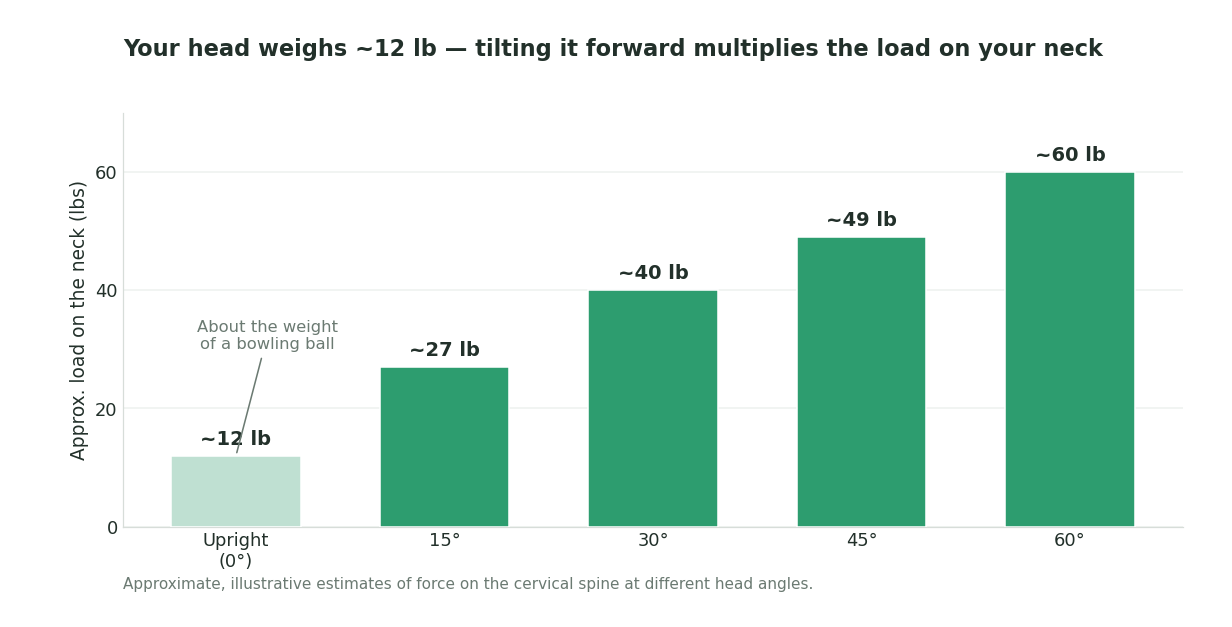
- “Tech neck” is a big driver. Your head weighs about 12 pounds; tilting it forward to a screen multiplies the load your neck has to hold.
- Movement beats any single fix. The most effective change is breaking up sitting often — not finding the “perfect” chair.
- Your setup matters. Screen height, chair support, and a monitor at eye level remove a lot of the daily strain.
- In-the-moment relief is real but secondary — heat, gentle movement, and topical products can ease a flare while the habits do the heavy lifting.
- See a doctor if pain radiates down an arm or leg, or comes with numbness, tingling, or weakness.
Is Desk Pain Actually Normal?
Common? Yes. Normal in the sense of “nothing you can do”? No.
Sitting at a computer for hours puts your body in a position it wasn’t built to hold for that long. The muscles of your neck, shoulders, and lower back have to work continuously — quietly, statically — to keep you upright and your head over your screen. That low-grade, never-ending effort is what you feel as stiffness and ache by the afternoon.
The good news in that explanation: because the cause is mechanical and behavioral, the fixes are too. You don’t need to accept daily pain as the price of an office job.
Why Sitting Wrecks Your Neck and Back
There’s rarely one cause. Usually a few of these stack up over a workday.
“Tech neck” — your head is heavier than you think
Your head weighs roughly 12 pounds — about the same as a bowling ball. When you hold it directly over your spine, your neck handles that load efficiently. But the moment your head juts forward toward a screen or phone, the effective load on your neck climbs sharply. Cleveland Clinic notes that this forward-head posture — popularly called “tech neck” — is one of the main causes of neck pain in people who sit at screens, and over time it can lead to chronic muscle tension, stiffness, headaches, and even pain or tingling into the shoulders and arms.
The further forward and the longer you hold it, the harder those neck and upper-back muscles have to pull just to keep your head up.
Static load — muscles fatigue from holding still
You’d think sitting is “rest.” Mechanically, it isn’t. Staying in one position means certain muscles stay switched on the whole time without the relief that movement brings. According to Mayo Clinic, sustained desk postures are a major contributor to neck and back discomfort — and prolonged sitting in general is hard on the back.
Your “engine” goes to sleep
Sitting for long stretches lets the big muscles that should support your posture — your glutes and core — switch off, while the muscles at the front of your hips tighten from staying bent. The result is a body less able to hold itself upright comfortably, so your lower back and neck pick up the slack.
A note for women
Musculoskeletal pain isn’t evenly distributed. Women report neck, shoulder, and lower-back pain at notably higher rates than men in office settings. If that’s you, the takeaway isn’t to worry — it’s to take the setup and movement fixes below seriously, and to adjust your workstation to fit you (chair, screen height, keyboard reach) rather than pushing through.
How to Relieve It — Starting With the Fix That Works Best
Move more often (this is the big one)
If you change one thing, change how often you move — not how perfectly you sit. No posture is good if you hold it for eight hours. Standing up, walking for a minute, or simply changing position every 30 minutes or so gives those overworked muscles a reset and gets blood flowing again.
Build it in so you don’t have to remember: stand for calls, refill your water across the room, set a gentle timer. Our guides to taking movement breaks at work and desk stretches you can do anywhere give you specific, no-equipment options. And for the bigger picture of why daily movement matters more than the occasional workout, see our complete guide to movement and mobility for people who sit all day.
Fix your setup (remove the strain at the source)
A few ergonomic adjustments quietly remove a lot of daily load:
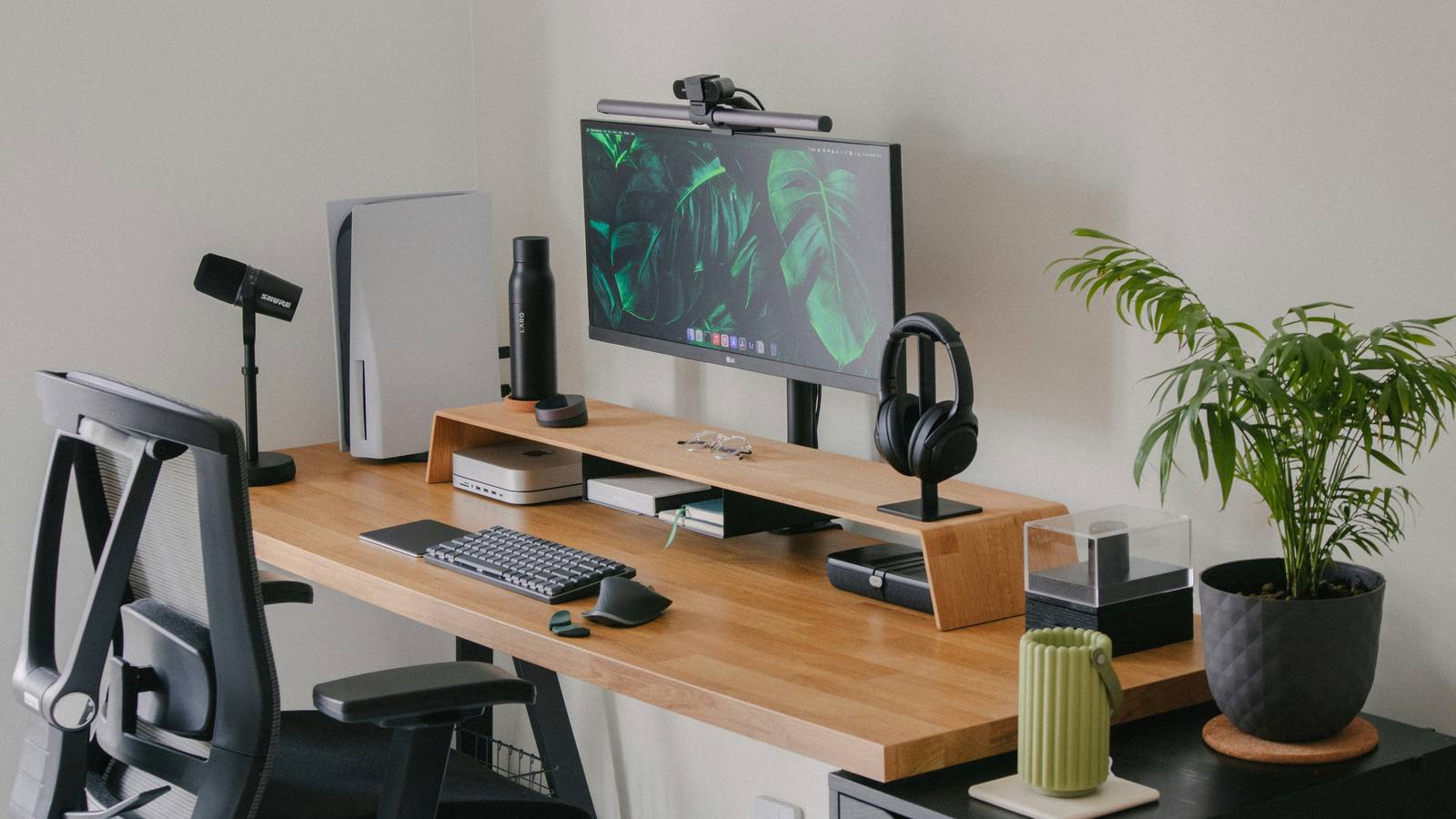
- Raise your screen. The top of your monitor should be around eye level, placed about an arm’s length (20–30 inches) away, so you’re not tilting your head down. A laptop stand plus an external keyboard is the cheapest fix for “laptop neck.”
- Support your back. Sit all the way back in the chair so it supports your lower spine; feet flat on the floor, knees roughly level with hips.
- Drop your shoulders. Keep the keyboard close enough that your elbows stay near your sides and your shoulders aren’t hunched up or reaching forward.
- Consider alternating sit and stand if you have a height-adjustable desk — variety is the benefit, not standing all day.
Stretch and loosen what sitting tightens
A short, consistent reset does more than one long stretch session. A simple end-of-day or hourly sequence:
- Chin tucks — gently draw your chin straight back (making a “double chin”) to counter forward-head posture.
- Chest/doorway stretch — open up the chest and front of the shoulders that round forward at a keyboard.
- Upper-trapezius stretch — ease one ear toward your shoulder to release the neck.
- Hip-flexor stretch — kneel or lunge gently to lengthen the front of the hips that tighten from sitting.
Our desk stretches guide walks through these with more detail. The goal isn’t athletic flexibility — it’s undoing the specific positions your job locks you into.

In-the-moment relief for a flare
Habits prevent pain; these help when it’s already nagging:
- Heat relaxes tense muscles and boosts blood flow — a warm shower or heat pack on the neck or lower back often loosens a stiff afternoon.
- Gentle movement usually beats lying still; a short walk or easy stretching keeps things from seizing up.
- Topical relief can take the edge off a sore spot while you keep moving (more on this below).
A Quick Desk Reset (Do This Hourly)
Keep it stupidly simple so you’ll actually do it:
- Stand up. Even for 30–60 seconds.
- Two chin tucks to reset your head over your shoulders.
- Roll your shoulders back five times to undo the hunch.
- One doorway or chest stretch, 20 seconds.
- Sip water, sit back down fully supported.
Five small things, once an hour, will do more for desk pain than almost anything you can buy.
When Immediate Relief Makes Sense
Everything above is the real fix: move more often, set up your workstation, and reset the muscles sitting tightens. That’s what changes your weeks and months. But correcting the cause takes time — and some days you don’t have time. You slept badly, a deadline is looming, and your neck is locked up right now.
Those moments are exactly where short-term relief earns its place. Reaching for comfort during a flare isn’t abandoning the real solution — it’s getting through a rough afternoon while the habits keep doing their slow work in the background. A warm shower, a short walk, gentle movement, and a topical rub all live in this “get me through today” category.
The trick is keeping the order straight: relief tools ease symptoms, they don’t correct the posture and movement patterns underneath. Use them as a layer on top of the fixes, never a replacement. With that framing, a topical can be a reasonable, low-risk option when one specific spot is sore.
What about topical pain products?
Two kinds of topical come up most often:
- Menthol-based rubs (the cooling gels) work mainly as a counter-irritant: the cooling sensation distracts from the ache and can feel relieving almost immediately. The effect is temporary, which is fine for a flare.
- Hemp/CBD topicals are increasingly marketed for sore muscles and joints. Used on the skin, CBD acts locally and doesn’t enter the bloodstream in meaningful amounts, which gives topicals a low side-effect profile. On effectiveness, the evidence is early and mixed — some people find a topical soothing, but how well CBD actually penetrates the skin to do anything beyond the carrier balm isn’t well established. We lay out the honest picture in our guide to CBD for muscle recovery.
If you want to try one as part of a wind-down or post-work routine, use it as a comfort tool layered on top of the real fixes — not a replacement for them.
One option to consider: Healer Topical — a physician-developed hemp topical
- What it is: a hemp/CBD topical from Healer, a brand developed by Dr. Dustin Sulak (a cannabis-medicine physician), made in the US with third-party lab testing
- Best for: rubbing into a specific sore area — neck, shoulders, lower back — as part of an after-work routine
- Honest expectation: topicals like this may feel soothing for some people; the evidence is early and mixed, and it works best alongside movement and setup changes, not instead of them
- Why this one: it’s transparently lab-tested and made by a brand with a clinician behind it — a more credible choice than the no-name balms that flood this category
👉 See Healer Topical | Physician-Developed
Affiliate link — we may earn a commission, at no cost to you. See our affiliate disclosure.
When to See a Doctor
Most desk-related aches respond to movement and setup changes. But see a healthcare provider if you have:
- Pain that radiates down an arm or leg, or numbness, tingling, or weakness — possible nerve involvement.
- Pain after a fall or injury, or that’s severe or steadily worsening.
- Neck or back pain with fever, unexplained weight loss, or loss of bladder/bowel control — these need prompt medical attention.
A professional can rule out causes that no amount of stretching will fix on its own.
The Bottom Line
Desk-job neck and back pain isn’t a sign you’re broken — it’s your body reacting to hours of holding still in a position it doesn’t love. That’s good news, because the levers are in your hands: move more often, raise your screen and support your back, and reset the muscles sitting tightens. Layer in heat or a topical when something flares. Do the small things hourly and the afternoon ache tends to fade over a few weeks.
If pain is radiating, persistent, or coming with numbness or weakness, stop self-managing and see a provider.
Frequently Asked Questions
Why does my neck and upper back hurt after sitting at a computer all day?
Mostly from holding your head forward toward the screen (“tech neck”) and keeping your shoulders and neck muscles statically engaged for hours. Both fatigue the muscles that support your head and upper spine, which you feel as stiffness and ache.
What’s the fastest way to relieve desk neck pain right now?
Stand up and move for a minute, do a few chin tucks and shoulder rolls, and apply heat to the tight area. A short walk plus gentle stretching usually beats sitting still and waiting it out.
Is a standing desk the solution?
It helps by adding variety, but standing all day brings its own aches. The benefit is alternating between sitting and standing and moving regularly — not replacing one static posture with another.
Do CBD or menthol creams actually work for muscle pain?
Menthol rubs provide a temporary cooling distraction that many find relieving. CBD topicals are lower-risk (they don’t enter the bloodstream meaningfully), but the evidence for them is early and mixed. Either can be a reasonable comfort tool — neither replaces fixing your posture and movement.
How long until the pain improves?
If you consistently move more, fix your setup, and stretch, many people notice a meaningful difference within a couple of weeks. Persistent or worsening pain warrants a doctor’s visit.
Sources
- Cleveland Clinic — Tech Neck: Forward Head Posture and Screen-Related Neck Pain
- Mayo Clinic News Network — Avoiding pain while working at a desk
- Mayo Clinic News Network — Tech neck is a pain in more than just the neck
- McCartney et al., Sports Medicine – Open (2020) — Cannabidiol and sport: recovery review
- Arthritis Foundation — CBD for Arthritis Pain: guidance and cautions
Related reading: stiffness and soreness that comes with age — why it happens and what actually helps.
These statements have not been evaluated by the Food and Drug Administration. Hemp and CBD products are not intended to diagnose, treat, cure, or prevent any disease. This article is for informational purposes only and is not medical advice. Consult a qualified healthcare provider before starting any new product or routine, especially if you are pregnant, nursing, taking medications, or have a medical condition.