
How Much Sleep Do You Really Need? Sleep Cycles Explained

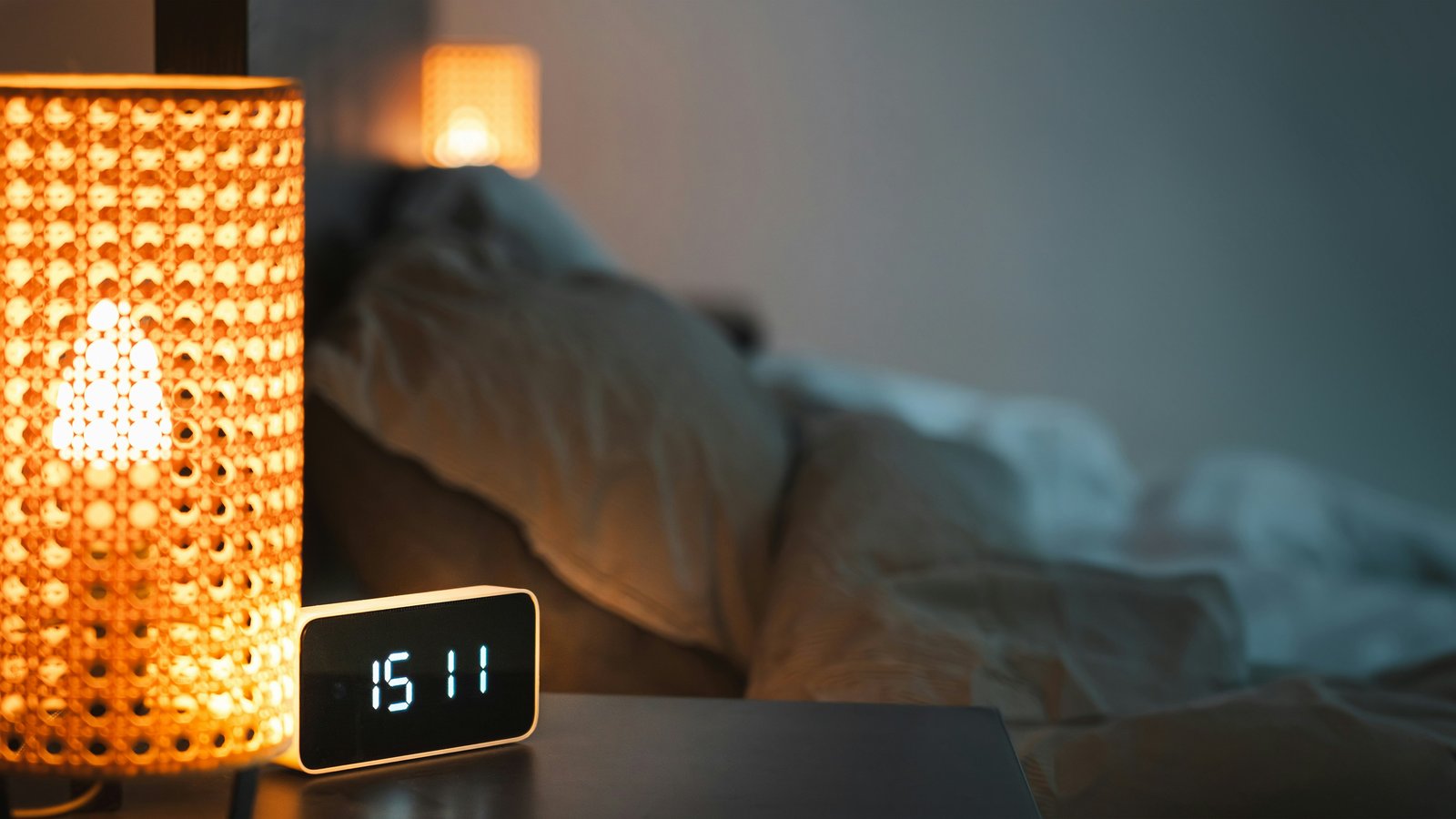
"Eight hours" is the number everyone quotes, but almost no one knows where it comes from — or whether it applies to them. Some people feel sharp on seven. Others drag through the day after what looked like a full night. The honest answer is more useful than the slogan: your body runs on cycles, not a flat hour count, and understanding how those cycles work tells you far more than any single number.
This guide answers how much sleep you need with something better than a slogan: what the research recommends by age, how the stages of sleep fit together across the night, and why when you wake up can matter as much as how long you slept. The goal is to help you find your own number rather than chase someone else's.
For the full picture of habits that improve your nights, start with our complete guide to better sleep naturally. This piece zooms in on the question underneath all of it: how much sleep you really need.
Key Takeaways
- Most adults need 7 or more hours a night, per the American Academy of Sleep Medicine — but the right amount sits on a range, not a single point.
- Sleep isn't uniform. You move through four stages in roughly 90-minute cycles, repeated four to six times a night.
- Deep sleep loads the early cycles; REM stretches longer toward morning — so a shortened night cuts different things depending on when it's cut.
- Waking mid-cycle is what makes you groggy. Lining your alarm up near the end of a cycle can leave you feeling clearer on the same amount of sleep.
- Quality and quantity both count — you can log eight hours and still wake tired if the deep stages were disrupted.
The Real Number: What the Research Recommends
Start with the evidence-based baseline. The American Academy of Sleep Medicine and the CDC recommend that adults get 7 or more hours of sleep per night on a regular basis. Note the phrasing — it's a floor, not a target of exactly eight, and it's tied to better health outcomes rather than a tidy round figure.
Need shifts with age. Here's the consensus guidance for how much sleep different age groups need per 24 hours:
| Age group | Recommended sleep |
|---|---|
| Adults (18+) | 7+ hours |
| Teens (13–17) | 8–10 hours |
| Children (6–12) | 9–12 hours |
| Preschool (3–5) | 10–13 hours (incl. naps) |
| Toddlers (1–2) | 11–14 hours (incl. naps) |
| Infants (4–12 mo) | 12–16 hours (incl. naps) |
These ranges come from a consensus of sleep researchers, not a single study, and the range itself is the point: two healthy adults can sit at different ends of "7 or more" and both be perfectly rested.
Why "8 Hours" Isn't a Magic Number
The eight-hour rule survives because it's a convenient average, not because your body checks a clock. Real sleep need is shaped by genetics, age, activity level, health, and recovery demands. A small slice of the population are genuine "short sleepers" who do fine on six hours; far more people think they're short sleepers while quietly running a deficit.
What matters more than hitting a magic number is consistency and how you feel. Sleeping seven hours on a steady schedule beats lurching between five hours on weeknights and ten on weekends — a pattern sometimes called "social jet lag" that leaves your internal clock perpetually confused. If you wake most days without an alarm, feel alert through the afternoon, and don't crash hard, you're likely close to your number, whatever it reads on paper.
How Sleep Cycles Actually Work
Here's the part the hour-counting misses. You don't sleep at one steady depth — you move through repeating cycles, each lasting about 90 minutes, and most nights contain four to six of them, according to the Sleep Foundation. Each cycle passes through four stages:
- N1 (light onset). The drifting-off stage, usually just a few minutes. Easy to wake from; you might not even feel you slept.
- N2 (light sleep). Where you spend roughly half the night. Heart rate and temperature drop as the body settles.
- N3 (deep sleep). The deepest, most physically restorative stage — when tissue repair and recovery ramp up. Hardest to wake from.
- REM (dreaming sleep). When the brain is highly active, consolidating memory and processing emotion. The eyes dart, the body stays still.
An early-night cycle runs roughly N1 → N2 → N3 → back to N2 → REM, then begins again. The mix isn't even across the night — deep sleep crowds the start and REM the end — which is the key insight for anyone trying to make the most of limited hours.
Deep Sleep Early, Dream Sleep Late
The stages aren't distributed evenly — they shift as the night goes on. Deep sleep (N3) dominates the first few cycles, front-loading the night with the most physically restorative sleep. By the early morning hours, N3 nearly disappears and REM periods stretch longer, with the final REM stretch potentially lasting close to an hour.
This has a practical consequence. Cutting your night short at the end — waking two hours early — robs you mostly of REM and the lighter stages, not deep sleep. But fragmenting the first half of the night chips away at the deep, restorative sleep your body leans on for physical recovery. It's one reason a late, broken night can leave you feeling wrecked even if the total hours don't look that bad. Substances that disrupt those early deep stages do real damage too, which is exactly why timing your caffeine and sleep matters more than most people expect.
Why Waking Mid-Cycle Feels Awful
Ever woken up after a "full" night feeling like you'd been hit by a truck, then another day on less sleep and felt fine? The difference is often where in the cycle your alarm landed.
Waking abruptly from a deeper stage produces sleep inertia — that thick, disoriented grogginess that can linger for many minutes. Waking near the end of a cycle, as sleep lightens before the next one begins, tends to feel much smoother. This is the logic behind "sleep cycle" math: because cycles run about 90 minutes, sleep totals that land near multiples of 90 minutes — roughly 6 hours (four cycles) or 7.5 hours (five cycles) — sometimes leave people feeling clearer than a number in between that wakes them mid-cycle. The effect is strongest earlier in the night and with naps, when deep sleep is still in play; across a full night, where the later cycles are lighter, the difference is smaller — but aligning your alarm closer to a cycle's end still tends to help.
Treat this as a rough guide, not a precise formula. Cycle length varies between people and even night to night, and the 90-minute figure is an average. Still, if you're choosing between setting an alarm for 7 hours or 7.5, the longer option that aligns closer to a cycle's end is often the kinder one. For more on easing the front end of the night, see our guide on how to fall asleep faster.
Quality vs. Quantity: Why Hours Aren't Enough
You can spend eight hours in bed and still wake up depleted. Total time is only half the equation — sleep quality, meaning how much uninterrupted deep and REM sleep you actually get, is the other half. Frequent awakenings, a noisy or warm room, alcohol, or late caffeine can all fragment your cycles so that the hours on paper don't translate into rest.
This is why "I get eight hours" isn't proof you're well-rested. If you sleep enough by the clock but never feel restored, the problem is usually quality, not quantity. Your environment does a lot of the heavy lifting here — a dark, cool, quiet room protects those cycles, which is the whole point of building the ideal bedroom for sleep.
How to Find Your Own Number
Forget the slogan and run a simple experiment. Over a stretch when you can afford it — a vacation or a quiet week — go to bed when you're tired and let yourself wake naturally, without an alarm. After a few days of catching up on any backlog, the hours your body settles into are a good estimate of your real need.
A few signals worth watching:
- You wake before the alarm, or right around it, without a fight.
- You're alert in the mid-afternoon without reaching for caffeine to stay upright.
- You fall asleep in roughly 10 to 20 minutes — much faster can signal you're overtired; much slower may point to other sleep-hygiene issues.
Once you know your number, the most valuable thing you can do is protect a consistent schedule around it. A steady bed and wake time, even on weekends, keeps your internal clock aligned and makes the hours you do get count for more.
Signs You're Not Getting Enough
Sleep debt is sneaky because the body adapts to feeling tired. Common signs you're running short:
- Relying on caffeine to function, especially before noon.
- Heavy afternoon energy dips and difficulty concentrating.
- Irritability, low mood, or a shorter fuse than usual.
- Falling asleep the instant your head hits the pillow (a sign of being overtired, not a talent).
- Sleeping far longer on weekends to "catch up."
The occasional short night isn't a crisis — the body is resilient. But a steady pattern of too little sleep is worth taking seriously, and persistent problems despite good habits are a reason to talk with a healthcare provider.
Frequently Asked Questions
How many hours of sleep do I actually need? For most adults, 7 or more hours a night, per the American Academy of Sleep Medicine and CDC. The exact amount within and slightly beyond that range varies by individual; the best test is whether you wake rested and stay alert through the day without relying on caffeine.
How long is one sleep cycle? About 90 minutes on average, though it varies from person to person and across the night. A typical night runs through four to six of these cycles.
Is it better to wake up at the end of a sleep cycle? Often, yes. Waking in lighter sleep near a cycle's end tends to feel smoother than being pulled out mid-cycle from a heavier stage, which causes grogginess called sleep inertia. Because cycles average 90 minutes, sleep totals near 6 or 7.5 hours sometimes feel more refreshing — but treat it as a rough guide, not an exact rule, since cycle length varies.
Can you get too much sleep? Regularly needing far more than the recommended range, or sleeping long but still feeling unrefreshed, can be a sign of an underlying issue rather than simply "extra rest." If that sounds familiar, it's worth raising with a healthcare provider.
Final Thoughts
How much sleep you need isn't a number to memorize — it's a range to discover. Most adults land at seven hours or a bit more, but the real answer comes from paying attention to your cycles, your wake-up grogginess, and how you feel by mid-afternoon. Aim for enough hours, protect their quality, and keep your schedule steady, and you'll get more out of every night than chasing a perfect eight ever delivers.
For the complete set of levers — light, temperature, routine, and the habits that make all of this easier — head back to our guide to better sleep naturally.
This article is for informational purposes and is not medical advice. Always consult a healthcare provider for persistent sleep concerns.
Sources
- American Academy of Sleep Medicine (Sleep Education) — Sleep FAQs: How Much Sleep Do I Need?
- Centers for Disease Control and Prevention — About Sleep
- Sleep Foundation — Stages of Sleep: What Happens in a Sleep Cycle
- Sleep Foundation — How Much Sleep Do We Really Need?
- Patel AK, Reddy V, Shumway KR, Araujo JF — Physiology, Sleep Stages (StatPearls / NCBI)
Related reading: If you tend to surface in the small hours, see why you wake up at 3 AM and how to get back to sleep.