

Weight loss › Side effects
BalanzGM is reader-supported — we may earn a commission from links on this site, at no extra cost to you. See our affiliate disclosure. This article is information, not medical advice.
The short version. Nausea is the headline effect and it is common — 44% of patients on semaglutide 2.4 mg in the Wegovy trials, against 16% on placebo. Most of what people experience is gastrointestinal and concentrated during dose escalation. Underneath that sits a shorter list of serious warnings that get far less coverage: pancreatitis, gallbladder disease, kidney injury from dehydration, and aspiration risk under anaesthesia. All the figures below come straight from the FDA labels.
Semaglutide — Wegovy 2.4 mg vs placebo
From the adverse reactions table in the Wegovy prescribing information:
| Adverse reaction | Wegovy 2.4 mg | Placebo |
|---|---|---|
| Nausea | 44% | 16% |
| Diarrhoea | 30% | 16% |
| Vomiting | 24% | 6% |
| Constipation | 24% | 11% |
| Abdominal pain | 20% | 10% |
| Headache | 14% | 10% |
| Fatigue | 11% | 5% |
Note how high the placebo column runs. Sixteen per cent of people who received no active drug reported nausea. That does not make the drug’s 44% less real, but it is a useful check on the instinct to attribute every symptom to the medication.
Tirzepatide — Zepbound by dose vs placebo
The Zepbound label publishes its table by dose, which is more informative:
| Adverse reaction | Placebo | 5 mg | 10 mg | 15 mg |
|---|---|---|---|---|
| Nausea | 8% | 25% | 29% | 28% |
| Diarrhoea | 8% | 19% | 21% | 23% |
| Vomiting | 2% | 8% | 11% | 13% |
| Constipation | 5% | 17% | 14% | 11% |
| Abdominal pain | 5% | 9% | 9% | 10% |
| Dyspepsia | 4% | 9% | 9% | 10% |
| Injection site reactions | 2% | 6% | 8% | 8% |
| Fatigue | 3% | 5% | 6% | 7% |
| Hypersensitivity reactions | 3% | 5% | 5% | 5% |
The label’s own summary of what turns up in at least 5% of patients also includes eructation, hair loss and gastro-oesophageal reflux disease.
The boxed warning
Both drug families carry it. The Wegovy version reads:
The Zepbound wording is materially the same, with one difference worth noticing: the semaglutide labels say rodents, the tirzepatide labels say rats, and tirzepatide’s adds that the effect was “dose-dependent and treatment-duration-dependent.”
The warnings that get less attention
These sit in the Warnings and Precautions sections and are, individually, far less common than nausea — but they are the reasons the labels exist.
- Acute pancreatitis. “Acute pancreatitis, including fatal and non-fatal hemorrhagic or necrotizing pancreatitis, has been observed in patients treated with GLP-1 receptor agonists.” Severe, persistent abdominal pain — particularly radiating to the back — is not a “push through it” symptom.
- Acute gallbladder disease. Gallstones and cholecystitis occur more often than on placebo; rates are higher in adolescents than adults.
- Acute kidney injury from volume depletion. Prolonged vomiting or diarrhoea can dehydrate you enough to damage the kidneys. This is the mechanism by which a “common” side effect becomes a serious one.
- Severe gastrointestinal reactions. Wegovy “is not recommended in patients with severe gastroparesis.”
- Hypoglycaemia. Low risk on its own; meaningfully higher alongside insulin or insulin secretagogues.
- Diabetic retinopathy progression. Patients with a history of it should be monitored.
- Pulmonary aspiration under anaesthesia. “Rare postmarketing reports of pulmonary aspiration in patients receiving GLP-1 receptor agonists undergoing elective surgeries.” Because the stomach empties more slowly, it may not be empty when everyone assumes it is. Tell your surgical team you are on a GLP-1.
The suicidality warning has been removed — and this is recent
On 13 January 2026 the FDA asked manufacturers to remove the suicidal behaviour and ideation warning from GLP-1 receptor agonist labelling. The agency’s stated conclusion was that its “evaluation did not identify an increased risk of suicidal ideation or behavior”; a meta-analysis of more than 107,000 patients “did not show an increased risk for SI/B or for other relevant psychiatric adverse events.”
Two honest caveats. First, a great deal of published material still describes this warning as current, because it was until January 2026. Second, label revisions do not all land at once — the Zepbound label revised 01/2026 still lists the section, and whether a newer revision has removed it should be checked directly on Drugs@FDA rather than assumed either way.
Removing a warning is not the same as ruling something out. If your mood changes on any medication, that is worth raising with a clinician regardless of what a label says.
What the labels do not give you
Per-event incidence figures for the serious effects — how often pancreatitis or gallbladder disease actually occurred — sit in section 6 of each individual label and are not summarised in the headline tables. We have not reproduced numbers we did not read directly. If a page quotes you a precise rate for compounded GLP-1 pancreatitis, ask where it came from; no such dataset exists, because compounded products are not studied.
Which brings up the obvious point. Every figure on this page comes from trials of FDA-approved products. None of it describes compounded semaglutide or tirzepatide, which have not been through that process at all. See compounded vs brand-name.
Sources
- FDA prescribing information, WEGOVY injection and tablets, rev. 05/2026 — accessdata.fda.gov
- FDA prescribing information, ZEPBOUND, rev. 01/2026 — accessdata.fda.gov
- FDA prescribing information, OZEMPIC, rev. 01/2025 — accessdata.fda.gov
- FDA Drug Safety Communication, removal of the suicidal behaviour and ideation warning from GLP-1 receptor agonists, 13 January 2026 — fda.gov
- FDA, “FDA’s Concerns with Unapproved GLP-1 Drugs Used for Weight Loss”, 15 June 2026 — fda.gov
More in the weight loss hub: who qualifies · how GLP-1 medications work
Compounded medications are not FDA-approved and are not generic versions of brand-name drugs. Eligibility and treatment are determined by a US-licensed clinician; results vary.
Medical disclaimer. This article is for general information only and is not medical advice. It is not intended to diagnose, treat, cure or prevent any condition. Prescription treatments require evaluation by a US-licensed clinician, who decides whether treatment is appropriate for you. Talk to your own healthcare provider before starting, stopping or changing any medication. Individual results vary. If you experience severe abdominal pain, persistent vomiting or signs of an allergic reaction, seek medical care.
Related review
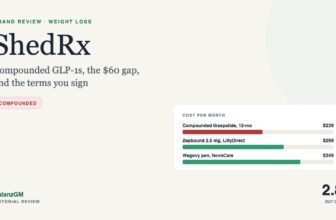
ShedRx review — including the FDA alert on dosing errors from multi-dose compounded vials.
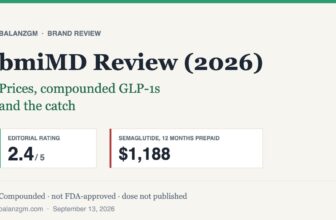
bmiMD review — why a compounded multi-dose vial makes the dosing question sharper than a pre-measured pen.